Ten years after pellet guns blinded protesters in Kashmir, a Bollywood trailer, Delhi protests and a local political row have reopened old wounds, reviving survivors’ painful stories of loss and survival, reports Babra Wani
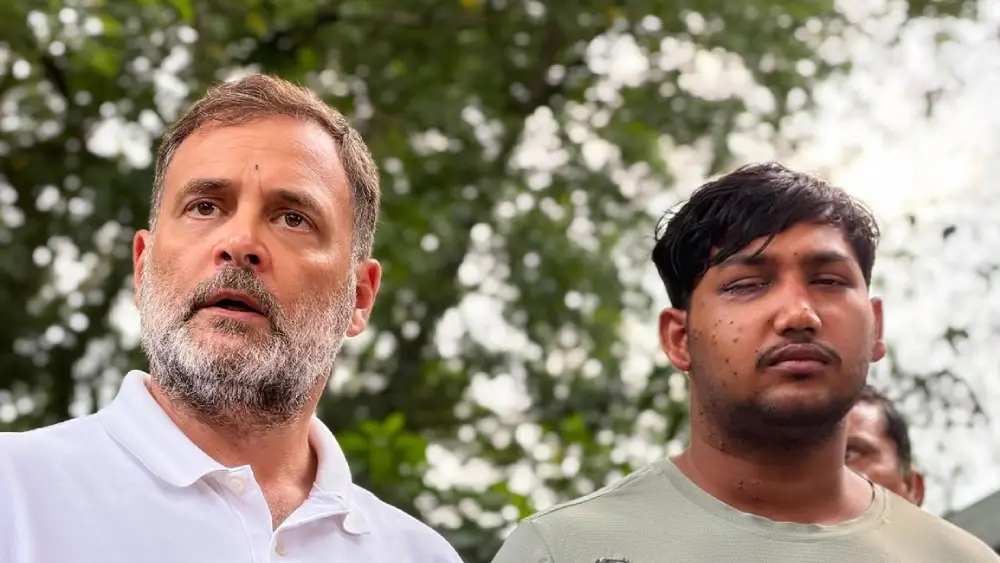
It was August 20, 2016, when Irfan, 19, heard of a death in a nearby village. Filled with rage, he and three other boys went there and began protesting. “I knew that I may fall victim to a stray bullet or a shell. I was ready to face death,” he recalled. “It was foolish of me not to think about my life.”
It was not a bullet or shell that hit him that day, but pellets – almost 60 to 70 of them – that left him blind in one eye for life.
The recent trailer for the Bollywood masala film Chauhaan, the Jantar Mantar protests in Delhi, and remarks by PDP leader Mehbooba Mufti have triggered a flash of memories among Kashmiris, especially those hit by pellets. The outrage led Mufti to apologise, but the debate dragged a decade-old wound back into public view. Irfan was among those whose lives changed forever that year.
“Personally, I had to struggle a lot,” he said. “At one point I was so done with life.”
Pellets struck his chest and face, mostly his right eye, leaving him blind on that side. Now married with a child, he is wary of revisiting the past. “I do not want to create any problems for myself. Back then I was young and immature. Now I realise what I did was wrong.”
Irfan was first taken to district hospital Pulwama, and then referred to SMHS Hospital, Srinagar, where he was treated for two months without success. Doctors there never operated properly on his eye. He eventually travelled to Hyderabad and underwent five or six surgeries, none of which restored his vision, though they left his eye looking normal to a stranger. “Alhamdulillah, I can work and carry out my normal life with ease,” he said.
Marriage proved harder. “When my parents started looking for a match, I faced rejections,” he said, estimating nine rejections in ten. Families making enquiries were told he was “a pellet victim,” followed by rumours: that his kidney had been removed, or that he had taken large sums of compensation. In truth he received only Rs 15,000 from a trust, and never secured a job.
Fearful of arrest, he had registered at the hospital under a false name and never filed an FIR, a decision, he said, shared by hundreds of pellet victims, which later cost them access to jobs or assistance reserved for those with official records. “We were never treated fairly,” he said. “We simply carried on with our lives.”
Eventually a marriage was arranged. His wife’s family valued his honesty; she learned of his blindness only after the wedding and accepted it without complaint. Three years on, he said, they are happy. “By the grace of God, I got a very good wife. She is even better than me.”

Wounded Decade
Kashmir’s recent history is marked by successive cycles of unrest, each leaving its own toll. The 2008 Amarnath land row, the 2009 Shopian twin deaths and the 2010 killing of teenager Tufail Ahmad Mattoo by a police tear-gas shell culminated in a summer of street protests that left 112 civilians dead and around 1,500 security personnel injured. It was against this backdrop that pellet guns were introduced in 2010, presented as a less-lethal alternative amid criticism that bullets were killing too many young protesters.
The real test came in 2016, after the killing of proscribed Hizbul Mujahideen’s militant leader, Burhan Wani. Eighty-nine days of curfew and protest followed, and pellets were everywhere. Officially, 51 people were killed and more than 9,000 injured between July 2016 and February 2017, over 6,200 of them by pellets. Independent estimates put civilian deaths from the unrest at 94. More than 1100 people suffered recorded eye injuries, and by some counts over a thousand Kashmiris lost vision, partially or completely, the year foreign correspondents began calling Kashmir’s crisis an “epidemic of dead eyes.”
For a few years, survivors remained part of Kashmir’s public life, marching, giving interviews, petitioning courts. The Jammu and Kashmir High Court Bar Association sought a ban on the weapon, a plea the High Court dismissed in 2020, ruling that “so long as there is violence by unruly mobs, use of force is inevitable.”
After Article 370’s reading down in August 2019, street protests largely stopped, and with them the public memory of what pellets had done. Mohammad Ashraf, who leads the Pellet Victims Welfare Trust, said his group shut down its advocacy work by 2024 under constant intimidation. Compensation files gathered dust. It would take events far from Kashmir to revive the conversation.
Limited Damage
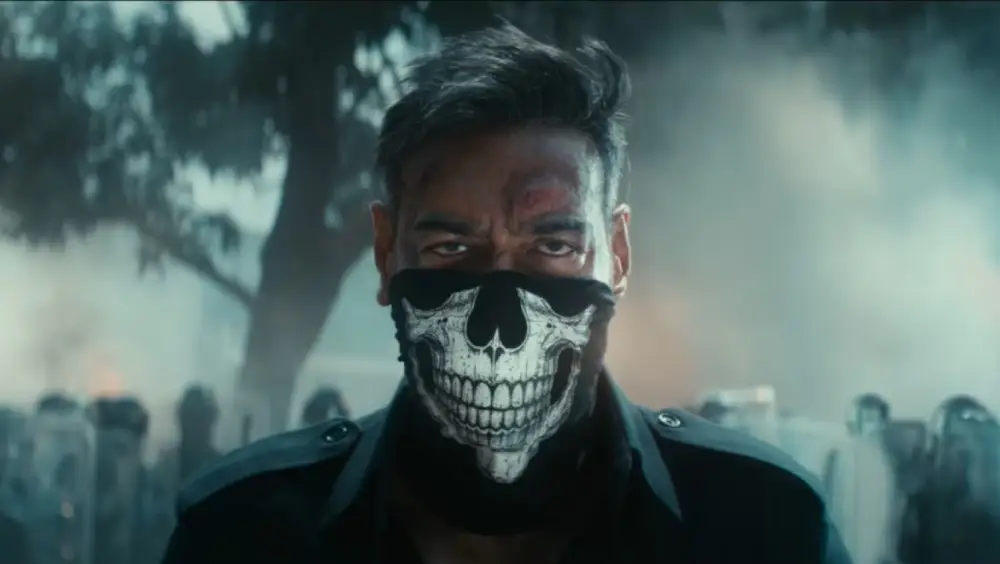
In late June 2026, Colour Yellow Productions and Jio Studios released the trailer for Chauhaan, an Ajay Devgn masala film set against the Kashmir crisis. It described pellet guns as inflicting only “limited damage” on protesters, promising “the response has arrived after seventy-five years.”
For a Valley that had spent a decade treating shattered eyes, the line landed like an insult dressed as a tagline. Inam Ahmad, who lost 80 per cent of his eyesight to pellets lodged in his skull in 2017 at sixteen, said the fragments still heat up and cause him pain. MP Aga Ruhullah Mehdi called the trailer “deeply disturbing,” noting what filmmakers dismissed had “left behind thousands of shattered lives.” Kashmir-born British Novelist Mirza Waheed accused the film of mocking the very people it claimed to depict.
The anger did not erupt in isolation. It followed months in which Chief Minister Omar Abdullah had publicly accused Bollywood of long villainising Kashmir on screen, a remark that had already primed a weary Valley. “Some people, instead of presenting reality, twist facts so that their films do well, or so the Central Government is happy with them,” Omar said, while attending a film-related event in Srinagar. “When films are shot here, they often show only firing, explosions or conflict. The story of Kashmir has changed, and we want filmmakers to show that changing story to the world.”
Delhi Echoes
Even as the Chauhaan row simmered, a very different protest gathered pace nearly 2,000 kilometres away. The Cockroach Janta Party, a satirical youth movement, led a month-long agitation at Jantar Mantar demanding Education Minister Dharmendra Pradhan’s resignation over paper leaks in the NEET exam. Solidarity protests spread to more than thirty cities; activist Sonam Wangchuk joined a 26-day hunger strike. On July 20, clashes broke out between marchers and the Delhi Police and Rapid Action Force.
What followed stunned a capital unaccustomed to weapons used routinely, for years, in Kashmir. Hospital records from Safdarjung and Lady Hardinge showed wounds consistent with pellet injuries. A 25-year-old described being struck while running; a 19-year-old was told he had almost no chance of saving vision in one eye. Delhi Police denied ever possessing or using pellet guns, calling the claims “completely false and misleading.” Meanwhile, the Rapid Action Force’s own inquiry acknowledged “excessive use of force” and announced it would stop deploying personnel from “special operation zones”, an apparent reference to Kashmir, for policing protests elsewhere.
For Kashmiris, the news carried bitter familiarity. A tactic tested for over a decade on their streets had reached the national capital, only now treated as scandal. “This is the first recorded incident in the capital of what is known as the world’s largest democracy,” cultural worker Tanvi Mishra told Middle East Eye, even as observers noted no three-year-old had been killed in Delhi, and no student sitting at home had been hit, as had happened in Kashmir.
Kashmir itself did not join the agitation. Student activists said they had followed it closely but stayed off the streets, citing surveillance, fear of the Public Safety Act, and years of being denied even permission to hold a press conference. Yet the distance did not spare them the aftershocks.
In Amritsar, eye surgeon Dr Indu Singh, who treated nearly 450 Kashmiri pellet victims through 2016, said the news from Delhi had reopened wounds she thought had scarred over. Kashmiri psychiatrists reported a rise in patients whose old trauma had resurfaced from watching the coverage, though most declined to speak on record.
Political Storm
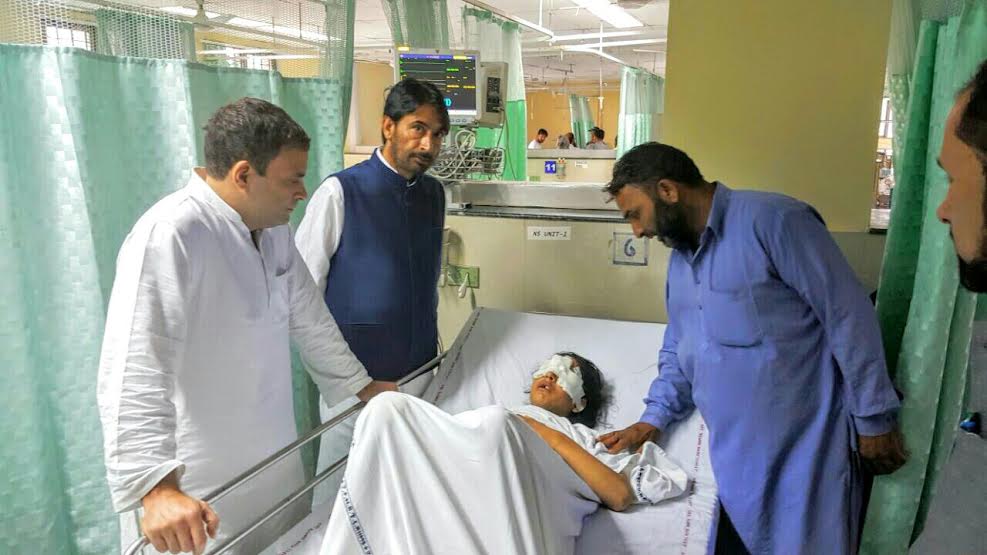
The Jantar Mantar violence soon travelled from hospital wards into Parliament and the courts. Congress leader Rahul Gandhi displayed an image of a pellet-injured victim. The issue also reached the Supreme Court, which examined the use of pellet guns against protesters in Delhi. The controversy thus acquired an institutional weight it had rarely received when similar injuries were confined to Kashmir.
It was in this atmosphere that Mehbooba Mufti travelled to Jantar Mantar with her daughter Iltija in solidarity. Contrasting the Delhi crackdown with Kashmir’s history of pellet use, she told reporters that the presence of militancy in the Valley meant force there “makes some sense” — banta hai, a phrase repeated back to her mockingly for days. In Delhi, she argued, unarmed students carrying no stones had been beaten regardless.
The remark detonated instantly. The ruling National Conference accused her of branding every Kashmiri protester, including children, a militant. MLA Tanvir Sadiq called it “disgraceful.” Apni Party president Altaf Bukhari revived Mufti’s own infamous 2016 remark questioning whether dead children had “gone out to fetch milk and toffees.” Omar Abdullah demanded an apology, distinguishing regret from an actual admission of wrongdoing.
Three days later, Mufti offered what she called a clarification: the video was genuine, she said, but in the heat of back-to-back interviews she had dropped the word bahana (excuse), which changed its meaning. “If my people were hurt somewhere, their hearts ached, then I apologise for that,” she said. The National Conference rejected the statement as a justification dressed as an apology. The row did what a decade of advocacy had struggled to do: it put the word “pellet” back on the Valley’s front pages, day after day.
Delayed Justice
Amid the storm, the Omar Abdullah government made an announcement that briefly cut through the noise. On July 30, 2026, it approved the release of Rs 41.16 lakh to Insha Mushtaq, the Shopian teenager whose bandaged, pockmarked face had become the defining image of 2016. These funds were given to complete an LPG gas distributorship sanctioned in 2018 but stuck in bureaucratic limbo since. “Justice delayed but not denied,” said Minister Satish Sharma.
Insha was 13 when pellets struck her face outside her home, leaving her permanently blind despite surgeries in Srinagar, Delhi and Mumbai. She has since completed her schooling in Braille, cleared her Class 12 examinations, and is pursuing a degree, hoping eventually to sit the civil services examination. She welcomed the compensation but was clear about its limits. “Pellets do not only injure a person,” she has said. “They destroy an entire life.” She renewed her appeal for a nationwide ban on the weapon, a demand sharpened, not softened, by events in Delhi.
Silent Grief
It was August 5, 2016, a Friday. Zahid, 28, of Bandipora, had gone into town with his aunt, never imagining the day would change his life. Near the Papachan Bridge, intense stone-pelting was underway when CRPF personnel fired pellet rounds towards the road. “I was one of them,” he recalled, his skin turning pale.
Dozens of pellets tore into his body; one struck his left eye. Rushed to SMHS Hospital, he underwent three surgeries but permanently lost around 40 per cent of vision in that eye. The physical injury, though, was only part of his suffering. Terrified of causing his parents pain, he never told them the truth. “I convinced them my eyesight had fully recovered. They still do not know.”
For nearly a decade, he carried the burden alone, visiting eye specialists across Kashmir without his family’s knowledge. “I never used eye drops in front of them. I hid every appointment, every prescription, every fear, behind a smile.” Since that day, he said, “I have not just lived with a damaged eye, I have lived with silent grief.” Married last year in an arranged match, he has not told even his wife. “This is the first and only time I am talking about it, and it is heartbreaking.”
The Chauhaan trailer struck a nerve. “Calling pellet injuries limited damage is deeply insensitive. How can anyone describe it as limited when a victim loses their eyesight?” he said. “Calling a single AK-47 bullet fired below the abdomen ‘limited damage’ would make more sense.” He noted the contrast with Delhi: “The issue was widely discussed, including in Parliament and before the Supreme Court. But when it comes to Kashmir, very few have spoken up for the victims.”
Endless Night
Rouf, 34, of North Kashmir, was 18 in 2010 when he stepped out for something as ordinary as collecting medicine. Pellet fire struck both his eyes. What followed was a relentless journey through hospitals in Srinagar and Delhi, including abdominal surgery and multiple eye operations; he has lost count of how many. Each carried a fragile hope his eyesight might return. It never did.
“The biggest change,” he said, “is that an independent person becomes completely dependent.” For 18 years he had seen the faces of his parents, siblings and friends. Then, almost overnight, everything disappeared. “It is only darkness now. It is like living in an endless night. There is no morning.”
He still dreams in colour, of familiar streets and faces he loves, but wakes to the same darkness. His deepest heartbreak came when his son was born. “I wanted to see my son just once,” he said, his voice breaking. “But I cannot, even though I can trade anything to see him.”
Yet amid the loss, he found compassion. Married for 13 years, his wife has never made him feel a burden. “She is my eyes.” His elderly father still goes to work to support the family he once expected his son to support in old age. “Allah has written everyone’s destiny,” Rouf said. “My wife accepted me wholeheartedly.”
On the Chauhaan trailer, he was blunt: “If people had truly seen the ground reality, they would never call it ‘limited damage’. Sometimes people sell the truth for money.” He considers the suffering harder than death. “When someone dies, people mourn for a few days. But in cases like ours, the entire family suffers every single day.” Painting, once a passion, is no longer possible; faith and literature have become his anchors.
The Supreme Court, hearing a petition challenging pellet guns for crowd control, has said protocols must be laid down to govern their use. Senior Advocate Vrinda Grover, who has researched the weapon’s history, noted that no standing order or regulation has ever governed its use since 1967, only an ad hoc 2011 task force SOP and an unpublished 2016 high-powered committee report. “There is no standing order of the Delhi Police that allows the use of pellet guns or even mentions the weapon,” she said. “This particular weapon, by its very nature, is unfit for use.”
(Names of pellet victims were changed on request to protect their identity.)