With Jammu, the erstwhile capital of an erstwhile Jammu and Kashmir state, getting impressive Kashmir crowds this winter and the month of fasting, Masood Hussain details the observance of Ramzan in the temple city
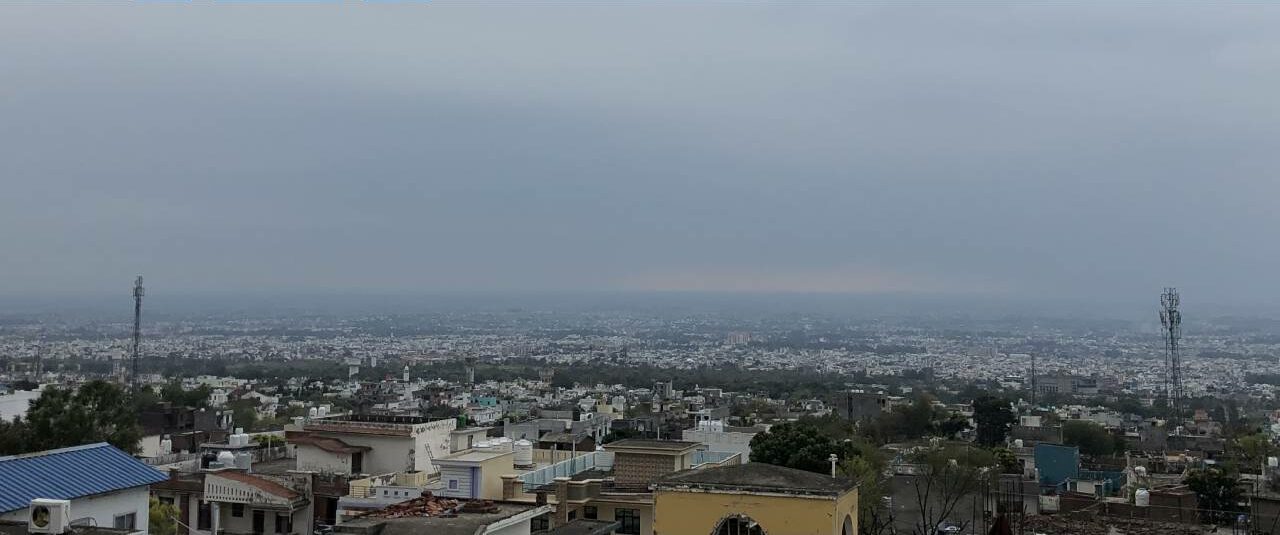
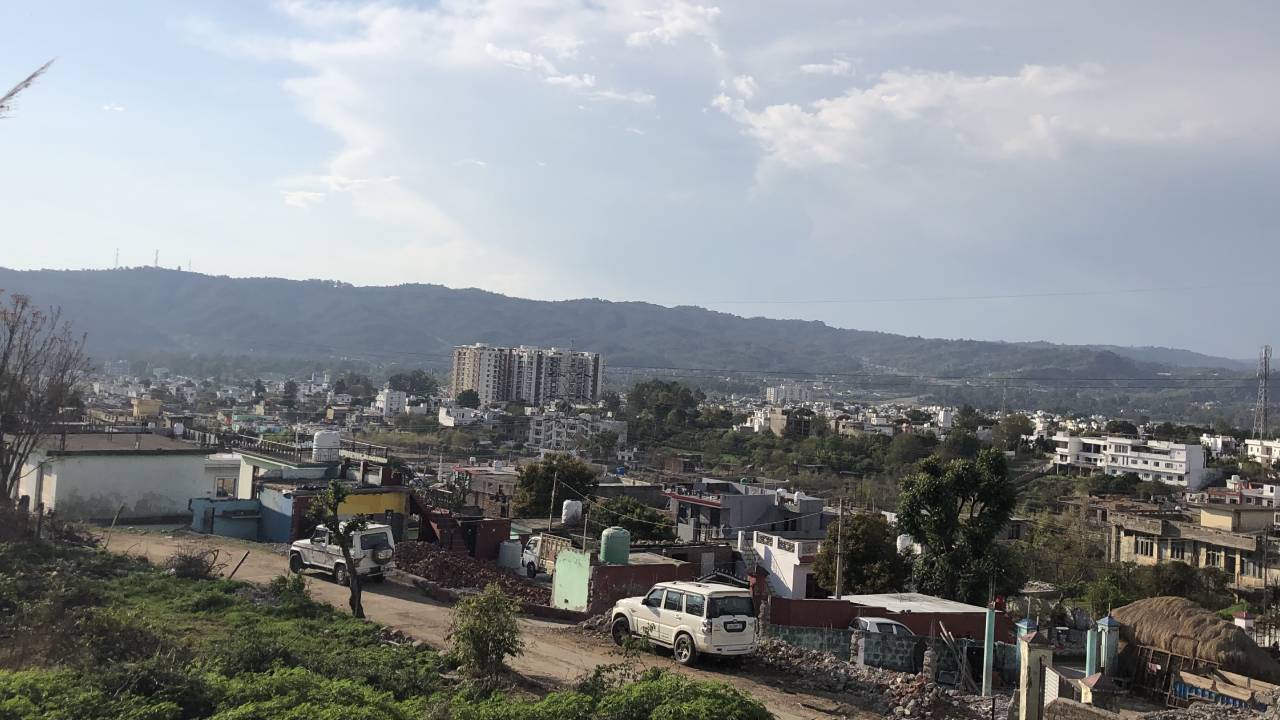
From the rooftop of Markaz ul Muariff in Bathindi, the night view of Jammu is breathtaking. Perched atop the hills, this multi-level structure offers a sweeping panorama of the city, which appears vast and luminous, adorned with countless twinkling lights. The expanse of the Tawi River stretches out on one side, its waters reflecting the glow of the city, while the newer extensions of Jammu unfold in the distance. Scattered patches of darkness, seen from above, mark green spaces and less illuminated areas. Those familiar with the city’s layout can effortlessly identify key neighbourhoods and landmarks, tracing the contours of Jammu’s ever-expanding urban landscape.
Markaz is one of the major institutions that have come up in Jammu city in recent years. It was initiated by a Rajouri Gujjar preacher and Muslim scholar, Mufti Faizul Waheed, who oversaw the building of this institution brick by brick. It is now a five-storey complex where nearly 1000 students and teachers operate, teach and live. It is a unifier as the managers avoid bracketing the institution in the sectoral divisions, unlike Kashmir.
“We have nearly 2000 students across this campus but more than half of them live around but not with us”, said Mufti Manzoor, one of the Markaz office bearers. “We have our school affiliated with the Jammu and Kashmir State Board of School Education (BOSE). Besides, we have affiliations with some universities. This helps us work, unlike a seminary where we teach a lot of subjects other than the traditional seminary work.”
Mufti said their students have a basket of languages, including Arabic, Urdu and English, and their science students have studied Aalimiyat for eight years at the same time. There is a library and many laboratories for the students in addition to the huge mosque and a chain of halls. “We work on our students after seeing their aptitude and guide them properly so that they do not end up losing out on opportunities in the world,” Mufti said. “We are helping some of our students who are keen to become IAS or JKAS officers, we help them in coaching.”

Since 1994, this institution has emerged as a major centre for teaching Islamic knowledge in Jammu, and the young students enrolled come from Punjab in addition to Jammu and Kashmir. “Our fund requirements have crossed Rs one crore,” Mufti said. “Though the students pay some small amounts at the stage of admissions, most of the funds are public donations.”
For most of the years of this centre’s existence, people would visit to make donations but after his demise in June 2021, the managers of the centre made efforts to reach out to potential donors. During Ramzan, the Muslim month of fasting, they visit people’s homes and the mosques and ask people to fund the initiative they have supported in the past.
Cluster of Mosques
Jammu has a huge network of mosques across the main city. Gujjar Nagar Dalpatiyan, Talab Khatikan and Ustad Mohalla, which remain the traditional Muslim addresses in the city, have modern structures that have emerged as new landmarks in the new settlements. “These people have fled militancy and taken refuge in Jammu, and over the years, they built their small houses and mosques for their prayers,” Ashiq Hussain, a hotelier, who has overseen the social change in his community for almost half a century, said. “Their presence has changed the business in Jammu and is still changing.”
Ashiq asserted that while the people took refuge in Jammu – Pandits, Ladakhis and Muslims from Kashmir and across Pir Panchal and Chenab Valley, the majority community in the city received them with open arms. “We have a parampara in Jammu that we participate in their religious function and they also reciprocate it,” Ashiq said. “There are interesting instances in which the people contributed to making things happen for the people who migrated to the city.”
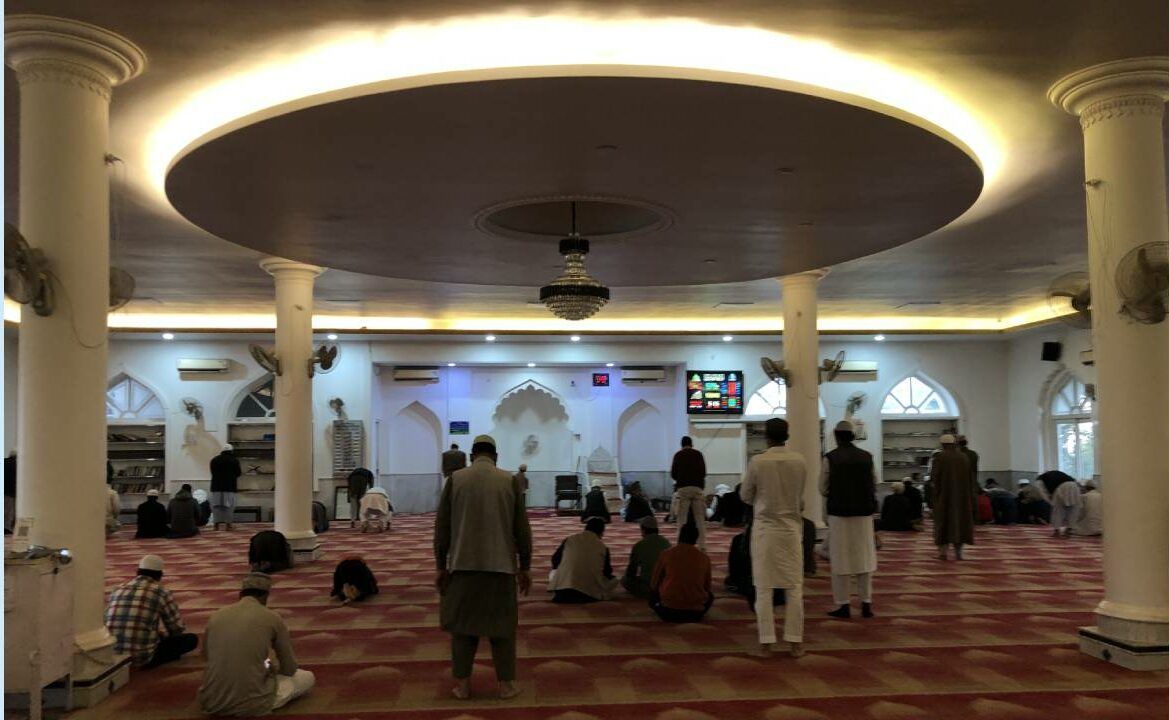
Amjad Shah, a journalist, said the best instances of communal harmony come from the main city where there is a mixed population. “When there is the Muharram procession, the market of Jain Bazar and Kanak Mandi closes and the shopkeepers raise stalls where they distribute water and other things,” Amjad said. “In Talab Tillo, there is a small mosque and on Friday’s when a lot may people come for prayers, the access to many houses, all non-Muslims, gets blocked. For all these years, I have witnessed that these people cease their routine and facilitate the namaz.”
The city offers an interesting mosaic of sounds at the time of Sehri. “Hazraat, Sehri main abhi panch minute bachay hain,” every uptown mosque would blare from its loudspeaker systems, a tradition missing in Kashmir. Then there would be calls for prayers given by well-trained Qari’s and Mouazins.
Crowded Mosques
This season, these mosques got huge crowds of the faithful. For the first time since 2018, tens of thousands of Kashmiris spent their winters in Jammu. These were employees on the rolls of the Jammu and Kashmir government who are on a durbar move without formally calling it so. There were businessmen and traders, and there were people who had second homes in Jammu but had forgotten to visit the town for the last many years.
Most of this is a floating population that invests in the city without altering its demography. They spend a few months in Jammu, consume, spend and return home. Their interest is key to the soaring value of the real estate. In Channi Rama and Bathindi, the per marla cost is as good as that of Hyderpora in Srinagar.
“This season, we saw the Kashmiris visiting Jammu in huge numbers,” Ashiq admitted. “The last three months were great business days, and we hope the government permits a formal durbar move so that we can take the business to the next level.” He believes that Jammu has not done its business well for many years, and given the situation that rail is moving beyond, the commercial relations between Jammu city and the rest of the erstwhile state must have got stronger.
Jammu has strong undercurrents that it is emerging as the main crucible of crisis, as the ruling BJP is busy with the new Naya Kashmir construct. “Earlier, the rail went to Katra, bypassing Jammu; now it will go directly to Kashmir,” one industrialist said. “Now you are getting an express highway that will connect Delhi to Amritsar to Katra, and it is not touching ground in most of Jammu. This all will have an impact, a serious economic impact. The government encouraged the setting up of a Tirupati temple and is promising they will help tourism but will it compensate for the loss?”

It is in this backdrop that a strong movement was going on in Jammu that permitting durbar move will help the Jammu retail get better. As Omar Abdullah’s government unofficially took the offices to Jammu, in every mosque in Bathindi, Sunjwan, Bajalta, Sidhra, Railhead, and all other newer locations, people from Kashmir would outnumber all others. “I have not come to Jammu for the last many years,” Mohammad Anwar, a resident of Kulgam, said. His son has built a small house in Jammu. With the closure of durbar move, the family did not feel like moving out in winter. “This year, my son was transferred to Jammu, and we all moved with him. It took us some time to make the necessary repairs to the house. Given his dedication towards the mosque, the local residential committee has nominated him to the mosque management committee.
Markets in Jammu worked nonstop this season. “I used to go home by 7 pm, till last year,” a grocer in Channi Rama said. “Now I work till 10 pm, after the last Nimazi from the local mosque goes home.”
Not far from his shop is a barber from Bijnor. “I had a shop with three seats and it was doing well,” the owner, who is now in his early 40s, said. “This season I added two more, now I have 11 seats in three shops and 11 staffers, and most of them are my relatives and friends from Bijnor.” The barber said that an estimated 1200 families from his Uttar Pradesh town own grooming and personal care salon shops in Jammu. “It is much less in comparison to Kashmir, where more than 3000 families are working.” He said he is aware of at least three cases in which the Bijnor salon owners have married and settled in Jammu.
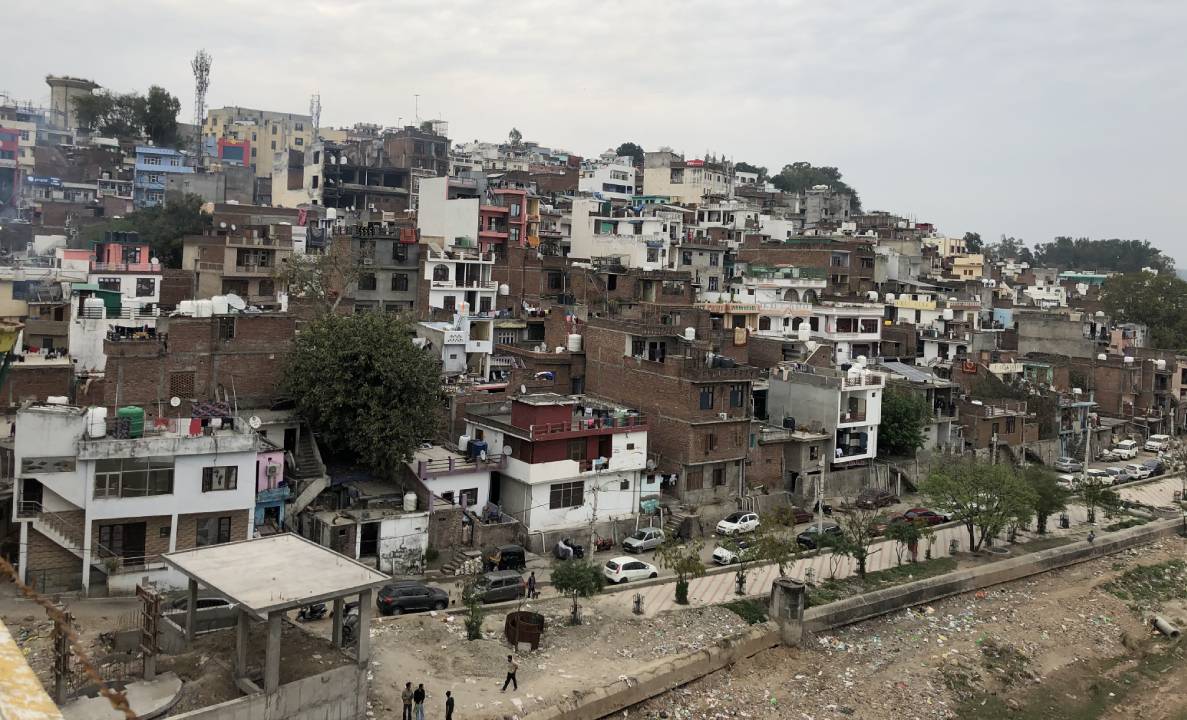
For a haircut at this man’s shop were two auto drivers. They own battery-operated three-wheelers and are making a good living. One was from Hoshiarpur and the other from a Chhattisgarh village. “I have been here for four years now and I live with my family,” Shakir, the Hoshiarpur resident, said. “Are you unhappy that I am not local?” Shakir told this reporter while driving to the civil secretariat. I said I am not a local. “Then it is fine. I will give you some concession also.” Gradually, Jammu is emerging as the key space where one can meet people from the entire North India, in addition to the refugees from Myanmar.
In the last five years, several new ventures have struggled to survive. “I had come as a partner to a restaurant owner four years ago,” a master chef, who knows the art of Wazwan, the all-mutton seven-course Kashmiri speciality, said, insisting he wishes to stay anonymous. “He had little income and was running his restaurant with a lot of difficulty. This year, I decided to part ways, and I am preparing and marketing Wazwan. Thank God, I have no spare time as I work almost around the clock.”
For most of Ramzan, hotels witnessed a chain of Iftaar parties. Of late, the political class took over, and the parties resumed in upmarket hotels that revived the pre-2018 memories.
The Mosque Iftaars
What is interesting in the Jammu case is that most of the mosques have elaborate Iftaar breakfast. “We make food for around 550 people daily, and all the money comes from the people who come here to offer prayers,” a volunteer at the Railhead Mosque said. “Invariably, it is biryani, and there is no discrimination about who seeks and consumes. It is time that matters – all present have it. We start offering soon after the Iftaar.”
The raising of these small donations for the daily Iftaar funds is a meticulous and quick operation. After Isha and Tarveh prayers, in a Channi Ramma mosque, a volunteer gets up at the main gate with a smartphone in hand. ‘People who wish to keep the Iftaar tradition alive must contribute using their phones, ’ goes his routine counsel. Within minutes, the code that his phone displays is scanned by scores of phone hand held by people around and within minutes, the funds for the next Iftaar get ready. ‘For the day, it is enough,’ he announces and fades into the crowd. Various Jammu areas have a disturbed water supply, and mosques fund tankers that flow from the open market if and when required.
As the city is expanding and the population is increasing, new pieces of architecture are being added to the faith infrastructure. “We have 145 mosques within the Jammu city and its immediate periphery that we manage and control,” a middle run official from Jammu Kashmir Wakf Board said, in addition to a chain of 22 shrines in the area. “We have good income from the vast Wakf property in the city, maybe Rs 7 crore or more, and we spend nearly Rs 6 crore a year on the upkeep of this infrastructure”.
The official said that most of the funds go to the salaries of the staff of these mosques and shrines and the routine upkeep of the infrastructure of faith. A small amount also goes into the maintenance of the property that the Wakf owns. “Unlike Rajouri and Poonch, we do not have langhar (free kitchen) culture in Jammu. Maybe in one off mosque, the free Iftaar is prepared for a few hundred people daily, and Wakf is funding that to keep the tradition alive,” the official said. “In Jammu, all the new mosques are run by the local managing committees and are not notified as Wakf affiliates.”
Waqf in Jammu has a huge property. Available open source data suggests that the properties include 286 shops, 118 houses, seven buildings, 95 rooms and quarters, five hotels and 28 halls. According to the information that the government of the erstwhile state of Jammu and Kashmir tabled in the assembly on January 15, 2017, the Wakf also owns 10276 kanals of land in the temple city. In another information, the government said that more than 333 kanals of land in five parcels, including a graveyard at Rehari stands occupied by the defence forces. At least four places in Jammu city, the education department runs its schools without a formal permission. At various other places, including Satwari, Chand Nagar, and the DC Office, different departments are running their facilities without formal authorisation.
Despite all the encroachments on the property, the Wakf is still running better. How it will change after the new Wakf Act comes into play remains to be seen, however. What is fascinating about the Wakf operations in Jammu is that it has a well-maintained huge graveyard in Gujjar Nagar where the dead are laid to rest without being asked if their families own the space, a stinking Srinagar city tradition where cemeteries have family ownerships.
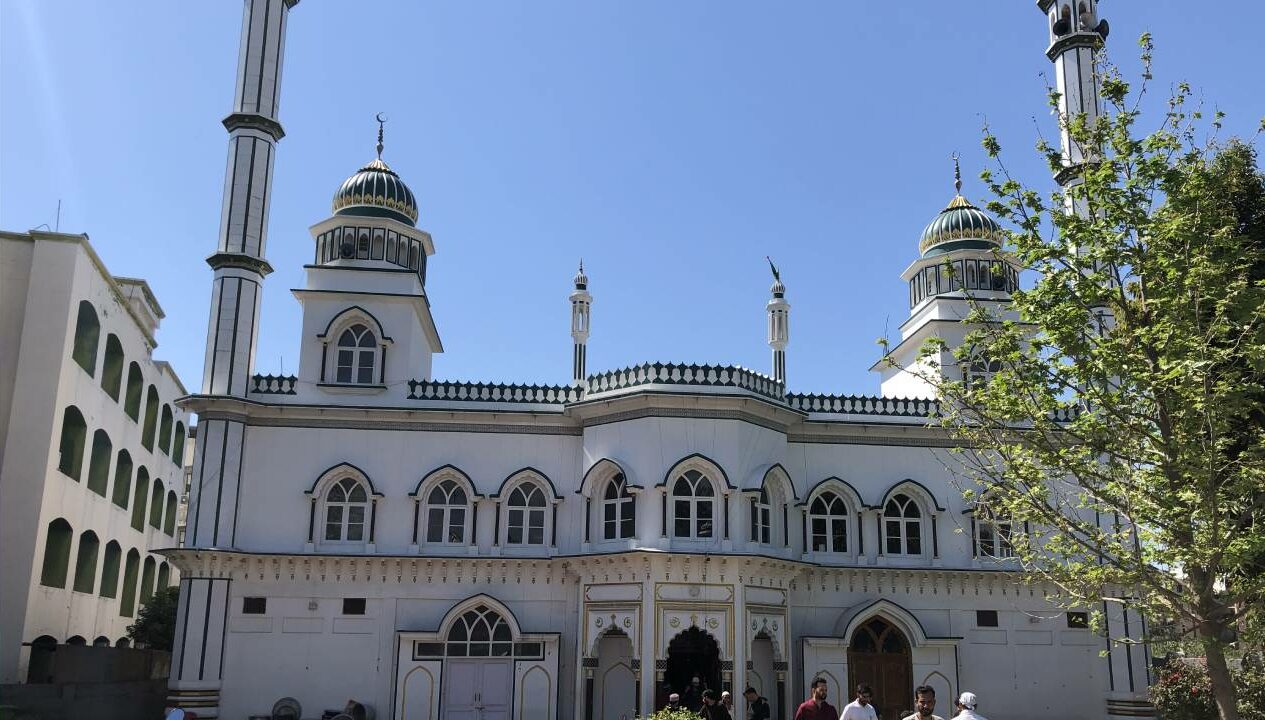
All the new mosques built in the last few decades are massive and complete units. Makkah Mosque in Batindi, the railhead mosque, the Channi Ramma mosque and the new expanded Jamia Masjid at Talab Khatikan are huge structures where thousands pray and remain usually crowded this Ramzan. The peculiarity of these mosques is that while they have enough and adequate space for prayers, they have elaborate bathing systems, special chambers for the staff and designated segregated spaces for the preparation of food, if and when required.
Deag (huge cooking pot) is part of the routine of all the major city mosques between Bathindi and Sidhra. Usually, the Taraveh prayers are led by Qari and Hufaz, who conclude within 60 to 90 minutes. Unlike Srinagar, there are no elaborate many many-hour Taraveh prayers in vogue.
Kashmir Influences
The Jammu Muslim population does not have very visible trends of consumption during the month of fasting. “It is just a routine. Nothing very special is consumed but the streets around the mosques in Jammu may be selling dates and other fruits during the Iftaar time,” Nisar Shah, one of the traders, said. “Barring certain mosques distributing free meals at the time of Iftaar, the rest revolves around family choices.”
A resident who shuttles between two homes in Srinagar and Jammu during winters and summers said the Dogra Muslims have more influence from the Punjabi plains. “Once upon a time, they had their cultural influences emanating from Sialkot but that impact ceased after partition,” the resident, who hails from Chenab Valley, said. “What I have observed during the Ramzan is that Iftaar is heavy at the family level and mostly comprises Chicken or Mutton Samosa, Dahi Balay type. Dinner is slightly a low priority, and fruit consumption is symbolic. This is unlike Kashmir, where Iftaar is light but diverse”.
For most of Ramzan, this reporter chased a dream of having a ripened red watermelon but it was rare. Residents said that the best of the melons go directly to Kashmir, where its consumption is record high. “Even though Jammu produces part of its own melons, the off-season dependence is on imports, which lack the quality owing to the Kashmir market,” one seasoned fruit vendor in Channi said.
What is very visible during winters, including Ramzan, is the massive influence of Kashmir on foods, apparel trends and praying styles. The city started adjusting to Kashmir cultural influences seriously with the 1990s migration of Kashmiri Pandits and the political class. With every passing day, as people started looking at Jammu as a winter destination and skipped the gloomy Kashmir situation, the influences started becoming visible. Most of the grocers in Bathindi and Sidhra know the Kashmiri names of the merchandise they sell.
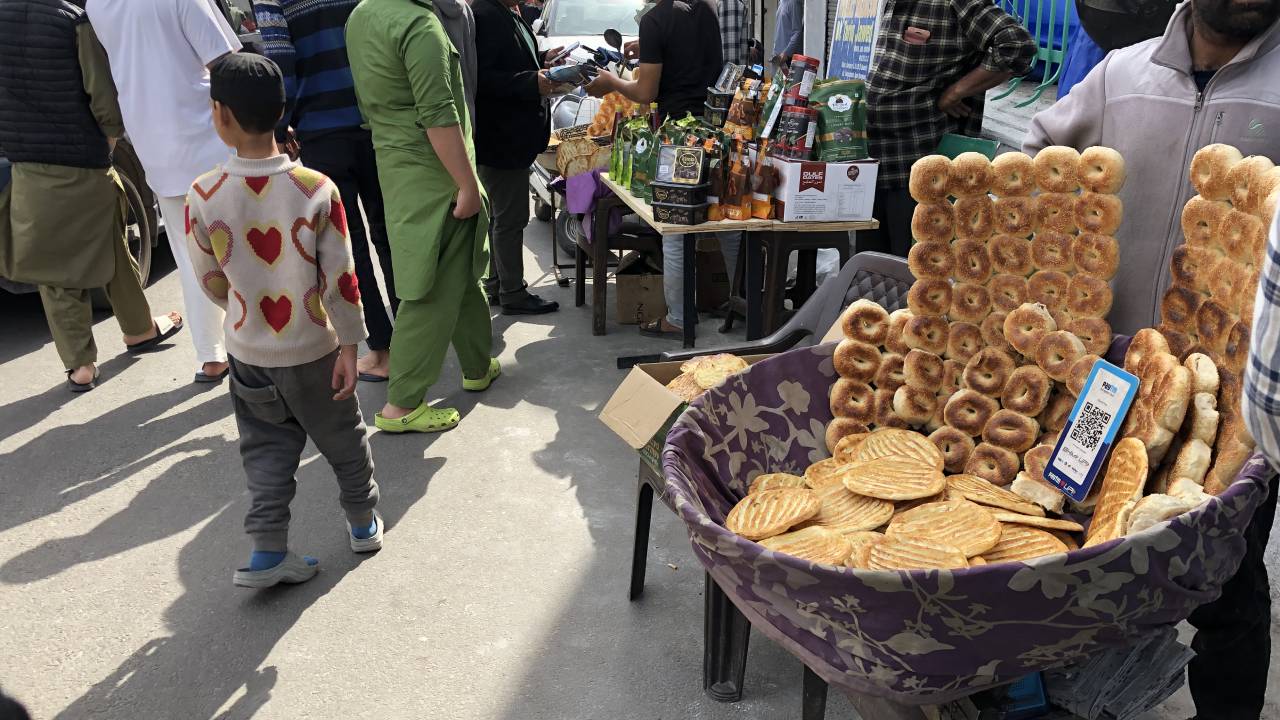
Pheran is as ubiquitous in Jammu as it is in Kashmir. Shops are selling Kashmiri fire pots, the Kangris, in good numbers every winter. The halal-mutton shops are, by and large, run by Kashmiri butchers. There are dozens of Kashmiri bakers who operate for around six months in Jammu and make enough money to fund the rentals of the next six months with the shutters closed. “We face bread issues for almost six months because the Kandur that operates for winter near us, goes home for summer,” journalist Zaffar Choudhary said. “It is challenging to have better bread in the neighbourhood in their absence.”
In most of the areas where Kashmiri Pandits live in rented, self-owned or government-offered settlements, the mutton and bread are completely managed by Kashmiri Muslim professionals who operate throughout the year. Historically, Kashmiri Pandits have been the only Halal mutton-eating Hindus, and they still are.
Sanjay Pandita is a middle rung officer who has lived at different places in Jammu city before constructing his home a Talab Tilo. “One thing I need to tell you at the outset is that we are not getting the same mahool (environment) that we lived in Kashmir,” Sanjay said. “Despite having the same faith, we differ a lot and if you need to see it, compare the weddings. There is not a single dish that we share. They have their own menu and we retain our own.”
Asserting that coexistence is a human trait and both the communities live happily with each other but “we live more happily with Kashmiri Muslims”. Every year in October, he said, in Talab Tilo and around, almost 16 shops open. “They sell dried vegetables, sun-dried fish, Hougard, collards, lotus stems, Kangris, and gram beans,” Sanjay said. “They work till our Shivratri is over, and then they lock their shops and come home. Their absence for nearly six months is a major crisis. This is, although in every Pandit locality, there is a Kashmir Muslim butcher and a Kandur.”
Jammu has a network of Kashmir Pandit settlements. There are townships at Nagrota, Jagti, Muthi-Buta Nagar and Purkhoo. “There are fewer locals around these localities, regardless of their faith but everywhere you will see Kashmiri Muslims around.” Admitting that both Kashmiri Pandits and Kashmiri Muslims see the Muslims and non-Muslims of the host population through the same prism.
“Relations between us and the Dogras are best. We work better together,” a Srinagar resident who lives mostly in Jammu because of his work, said. “Dogras understand our issues and problems but go against the Kashmir verdict because of induced insecurity. Now he admits that it is hurting him more but is unlikely to change.” As for Dogra Muslims, the tensions have been there for a long time. “These are healing but may take more time. I think joining hands for upkeep of the faith infrastructure is just the beginning.”