Almost three months after the right-wing parties launched protests against the enrollment of Muslim students at the Shri Mata Vaishno Devi Institute of Medical Excellence, NMC withdrew the college recognition, and it put on celebrations in Jammu, reports Syed Shadab Ali Gillani
It was sort of a desertion. On November 8, the hostel corridors of the Shri Mata Vaishno Devi Institute of Medical Excellence (SMVDIME) were nearly empty as it was the final night in the premises for the inmates. Suitcases stood by doorways, textbooks lay scattered across beds, and students moved through rooms they had occupied for just a few months. Some had already left. Others are prepared to follow.
“We had just settled in,” said one student, who requested anonymity. “The faculty was good. The environment was good. We were attending classes, studying, living the life we had worked for. Then the protests started, and suddenly we were the issue, not because of our grades, not because of anything we had done, but because of who we are.”
As students packed their last belongings at SMVDIME, they watched their academic aspirations collapse into something far more unsettling: a confrontation over faith, and the fundamental question of who is entitled to study medicine in an institution established on land meant to serve all.
“There is no clarity about the future. The government has assured that all the students will be adjusted in nearby medical colleges, and we are just being optimistic as we do not have any other option,” the student said. These students have been there since October 28, 2025, when the JKBOPEE third-round counselling list allocated them to this college.
For two months at SMVDIME, operations remained consistent. “Everything was functional, and everybody was upbeat, faculty as well as the students,” said another student.
The first fortnight was incident-free, and then protests broke out and reached the college gates. “It did not impact the campus. The staff worked to maintain safety and comfort. While there was unrest outside, the interior remained stable until the National Medical Commission (NMC) order was issued,” the student added.
The NMC order was the marching order. Students had already started leaving as if the closure smelled from the campus. Finally, when the notice was public, “the staff and students exchanged goodbyes.”
In order to reduce the pain of the students, the government quickly issued a statement that the students will be relocated to other medical colleges within Jammu and Kashmir. “This is the remaining option, but the situation has caused stress and anxiety,” the student said.
The Genesis of Controversy
Shri Mata Vaishno Devi (SMVD) is run by one of the wealthiest Hindu boards in India. Its medical college was inaugurated with considerable fanfare in 2024. The college received its Letter of Permission from the NMC in September 2025, following a detailed inspection by experts. The institution admitted its first batch of 50 MBBS students for the 2025-26 academic session based strictly on merit rankings from the National Eligibility cum Entrance Test (NEET).
What followed, however, transformed an educational initiative into a communal flashpoint. When the admission results were announced, 42 of the 50 seats were secured by Muslim students, predominantly from Kashmir. Seven seats went to Hindu students and one to a Sikh student. It sparked outrage among the small groups affiliated with the Sangh Parivar.
They argued that a medical college raised on donations from Hindu devotees should not have Muslims enrolled, as it violated the faith-based character of the institution. Chief Minister Omar Abdullah pointed out that since the college was built on state land with state funds, the public institution must be governed by constitutional principles of equality and merit. It did not help.
Political Backing
The discontent crystallised into organised protest with the formation of the Shri Mata Vaishno Devi Sangharsh Samiti, an umbrella organisation comprising nearly 60 pro-RSS and pro-BJP groups. With backing from the BJP, the Samiti launched a 45-day agitation demanding that Muslim students from Kashmir be transferred to other colleges.
The campaign gained momentum and political traction. Sunil Sharma, Leader of the Opposition in the Jammu and Kashmir Assembly, personally petitioned Health Minister JP Nadda. His proposal was striking: convert the medical college into a gurukul, a traditional Hindu educational institution for Vedic studies.
Colonel (Retired) Sukhvir Mankotia, convenor of the Samiti, led demonstrations and warned of intensifying agitation if demands were not met. The Samiti’s quickly raised youth wing staged protests near the civil secretariat, maintaining pressure on authorities. The protests soon reached Delhi.
A Surprise Visit
On January 2, the NMC’s Medical Assessment and Rating Board conducted what officials described as a “surprise inspection.” More than a quarter after permitting the college to admit the first batch, the NMC now discovered that the institution is falling short of regulatory standards.
The teaching faculty showed a 39 per cent shortfall, while tutors, demonstrators, and senior residents were deficient by 65 per cent. The outpatient department recorded fewer than 50 per cent of the required patient load, and bed occupancy stood at just 45 per cent against the mandated 80 per cent. Intensive Care Units operated at approximately 50 per cent capacity.
The NMC said it found student practical laboratories and research facilities absent in several departments. Lecture theatres failed to meet minimum standards. The library, often considered the intellectual heart of an academic institution, possessed only 50 per cent of the required books and just two journals against a requirement of 15. Critical facilities an ART centre, MDR-TB management facility, adequate operating theatres, and separate male and female wards, were either missing or insufficient.
“The assessment report submitted by the team of assessors conclusively established that the complaints were true and substantiated. The deficiencies observed were gross and substantial,” the Health Ministry later said. “Continuation of the institution under such circumstances would have seriously jeopardised the quality of medical education and adversely affected the academic interests of the students.” In a quick follow-up, the NMC withdrew the Letter of Permission.

Celebrations
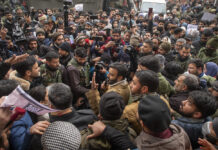
Within hours after the NMC decision, the sound of celebratory drums echoed through the streets of Jammu as hundreds gathered to mark what they called a “victory”. The scenes were paradoxical: a region where communities typically mobilise for the establishment of medical colleges now witnessed jubilation over the dismantling of one.
Samiti leaders are excited. “We will call off our 45-day-long successful agitation,” BJP lawmaker Mankotia announced. But we will continue to keep watch on the activities of the shrine board, which should work only for the welfare of Hindus.”
BJP, its president and MP, Sat Sharma, said, would not have politicised the issue “had it not been a matter of faith.” He toldthe media his party’s position was “confined to facts, norms, and public interest.”
“The way Omar Abdullah Sahib tried to divert the issue and turn it into a Hindu-Muslim debate, he has been given a strong answer,” Sunil Sharma said. “Students’ careers have been safeguarded, and people’s faith has been respected.”
Regrets
Unlike Jammu, the decision was regretted in Kashmir. The timing explained the situation.
Critics point out that medical colleges across India routinely face deficiency notices from regulatory bodies. The standard protocol typically involves hearings, opportunities for institutions to address shortcomings, and time-bound corrective action plans. Hundreds of colleges, both established and new, receive letters highlighting inadequacies. Almost invariably, these institutions retain recognition after presenting remedial measures and undergoing subsequent reviews. Going by the standards that NMC wished to enforce in Katra, most of the GMC network in Jammu and Kashmir may get locked.
Addressing reporters, Omar held the Samiti responsible for “destroying the dreams of aspiring doctors” and criticised the celebrations as insensitive and unjustified. “Across India, people struggle and agitate for the establishment of medical colleges. Here in Jammu, protests were organised to shut down a medical college,” he observed pointedly.
Abdullah rejected claims that admissions had harmed Jammu’s interests, explaining that merit-based systems naturally fluctuate. “This year, over 40 students got admission from Kashmir. Next year, students from Jammu will be admitted. That is how merit-based systems work,” he said. Days earlier, he had advised not to admit their children to the college due to the “prevailing environment of fear,” stating, “We don’t need this college. It’s not worth being a medical college.”
Dr Farooq Abdullah said the decision has caused widespread disappointment and reflects a disturbing trend in the country’s approach towards educational and medical institutions. “Yes, this is undoubtedly an injustice, and we are saddened by the current trajectory of our nation,” he said.
People’s Democratic Party leader Waheed Parra called the cancellation “deeply disturbing,” arguing it sent a wrong message to the nation. “Unfortunately, the SMVDIME was cancelled solely because minorities were getting full admission there.”
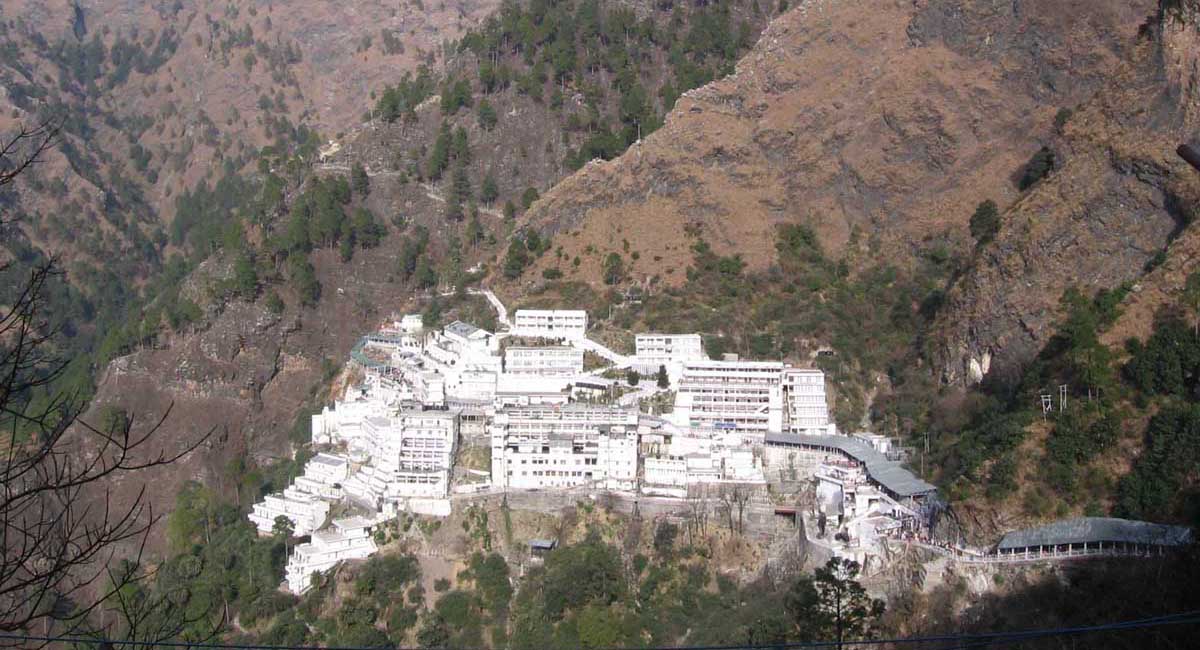
A Shakespearean Tragedy
“The closure of the medical college in Katra is like a Shakespearean tragedy of Othello,” a literature student and former government officer said, apparently pained over the action. “Moorish general kills his wife, Desdemona, by smothering her with a pillow because he was poisoned by his ensign, Iago, against his wife.”
The titular king said before he killed her: “I will put out the light, and then put out the light”.
“That is exactly what happened in Katra,” the officer said.