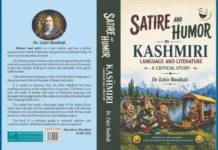
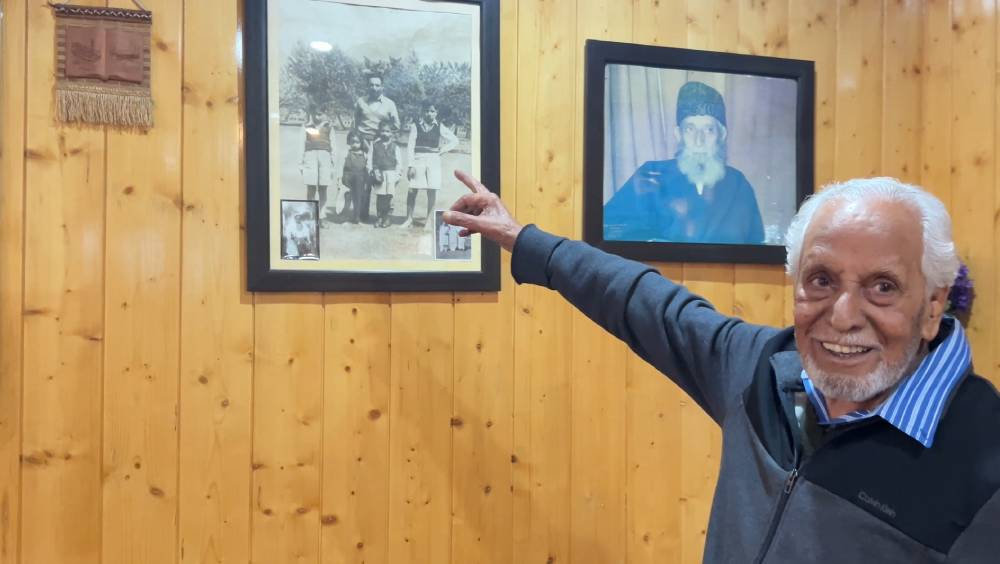
The year he turned 90, Nazir Ahmad Khan decided to write his autobiography. On his next anniversary, the book was out and it is a long story of an enthusiastic individual who has weaved his story with the institutional history of Kashmir, writes Muhammad Nadeem
Nazir Ahmad Khan’s autobiography, Biscoe Boy’s: Echoes of Time, offers a detailed and evocative account of his life and times. Through personal anecdotes, historical insights, and reflections on Kashmiri culture and identity, Khan provides an intimate portrait of Kashmir’s socio-political evolution during the 20th century.
Formative Years
Khan’s early life unfolds against the backdrop of an evolving Kashmir. Born in 1933 in Baramulla, his formative years were marked by a strong connection to family and the sociocultural vibrancy of pre-partition Kashmir. His father’s career as a civil engineer provided a stable yet dynamic foundation, exposing the young Khan to the infrastructural growth of the region, which included among other things, the construction of iconic bridges in Srinagar. The idyllic yet disciplined environment of the Tyndale Biscoe School further shaped his character, instilling values of resilience, leadership, and a commitment to service.
Khan vividly recounts his childhood experiences, including participating in regattas on Dal Lake and attending Akbar Islamia High School in Jammu. His time at Biscoe High School was marked by camaraderie and rigorous education, highlighting the school’s diverse student body from Ladakh, Baltistan, and Gilgit. Khan’s focus on education and institutional reform mirrors the modernisation theory, emphasising technological and educational advancements as drivers of social progress. His reflections on missionary education in Kashmir offer a unique perspective on the region’s societal development. Khan’s resilience and adaptability shine through in his accounts of navigating Partition, tribal raids, and administrative upheavals. The book’s emphasis on youth development, education, and sports offers a hopeful narrative for Kashmir’s future, complemented by Khan’s pioneering contributions to scouting and sports administration.
Historical Events
Echoes of Time is more than an autobiography; it is a living archive of Kashmir’s socio-political and institutional evolution, interspersed with the author’s reflections and accomplishments. Khan captures a remarkable journey through the layered history of Kashmir, reflecting the challenges and triumphs of the author as he rose through various professional and personal milestones. Khan’s experiences, particularly in the transport, sports, and scouting sectors, offer a unique lens into the region’s transformation during the 20th century.
His recollections of the partition of India and the subsequent tribal raids of Kashmir in 1947 are poignant. These events disrupted the communal harmony he had known and left indelible scars on his worldview. The loss of his friends—Muslim, Sikh, and Pandit—due to the partition and violence underscores the personal toll of political upheaval.
The book’s primary contribution lies in its documentation of institutional histories that are often overlooked in Kashmiri historiography. Khan’s detailed accounts of the transport department’s evolution, the introduction of scouting programmes, and the development of youth sports councils provide invaluable insights into the region’s modernisation efforts.
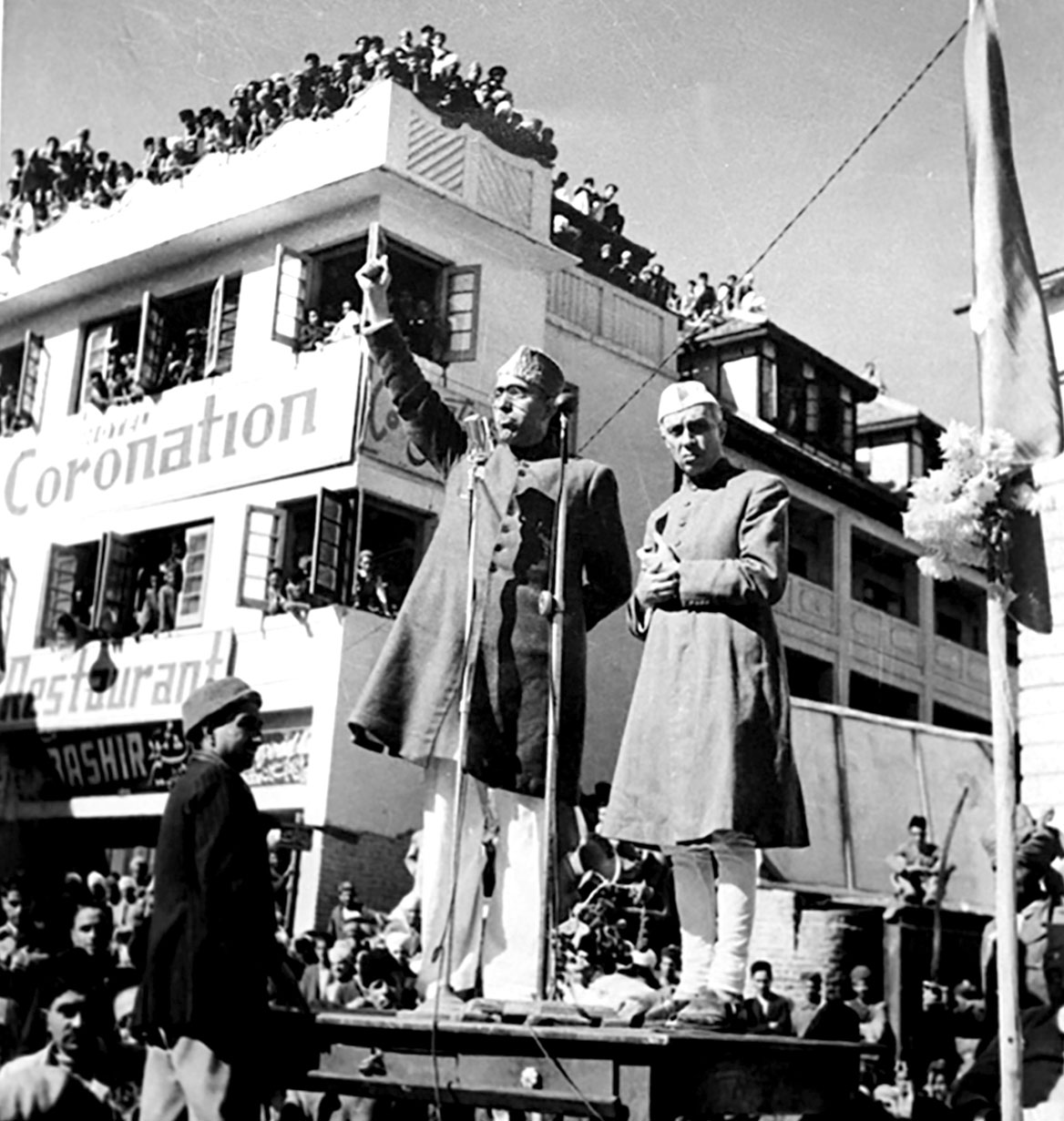
Khan provides a ground-level perspective of key historical moments, such as the Maharaja’s standstill agreement, Sheikh Abdullah’s rise to power, and the eventual accession of Kashmir to India. His detailed accounts humanise the broader geopolitical conflict, offering insights into the everyday lives of Kashmiris caught in the crossfire of history.
Khan offers a compelling exploration of the administrative and infrastructural hurdles faced in mid-20th-century Kashmir. His narrative of the first truck convoy to Leh stands out as a landmark moment in the region’s development, highlighting his proactive leadership in driving the initiative forward. Incidentally, his father had laid the road to Ladakh as a civil engineer.
The book also serves as a cultural repository, capturing the essence of daily life during this transformative era. Whether overcoming treacherous terrain, optimising limited workshop resources, or excelling in international training, Khan embodies resilience and ingenuity. His professional achievements, from spearheading the Leh transport convoy to revitalising youth sports, are presented with vivid detail, immersing readers in these pivotal experiences.
Khan also subtly reflects the complex political landscape of Kashmir. References to Sheikh Muhammad Abdullah’s arrest and the broader geopolitical tensions are woven into the professional narrative, demonstrating how personal and political histories are intricately connected. Khan beautifully balances professional experiences with personal milestones.
Khan’s professional narrative is characterised by a consistent drive for improvement and innovation. His detailed descriptions of workshop operations, vehicle maintenance, and infrastructural challenges reveal a deep technical understanding and commitment to institutional development. His ability to find creative solutions – such as converting old vehicles for a film shoot or developing specialized buses for rural services – demonstrates remarkable resourcefulness.
The narrative takes an interesting turn with Khan’s professional training in the United States. His detailed observations about American industrial practices, transportation systems, and cultural nuances provide a fascinating comparative perspective. His keen interest in technological processes and organisational structures reflects a commitment to continuous learning and professional development.
Culture, Traditions, and Identity
Khan’s autobiography is both a personal journey and a window into the history and culture of Kashmir. By chronicling his life in detail, Khan not only preserves his legacy but also offers a lens through which readers can understand the complexities of Kashmiri identity and resilience.
Khan’s professional experiences in the state transport department, reveal a nuanced account of institutional building and administrative challenges in post-partition Kashmir. His journey from an unpaid apprentice to a Works Manager demonstrates both personal ambition and the broader developmental efforts of the newly formed administrative structures.
Khan’s approach to workplace management is particularly noteworthy. He emerges as an innovative and empathetic leader, implementing progressive strategies to improve workshop efficiency and staff morale. For instance, his method of sitting at the workshop gate to monitor attendance and personally engaging with workers showcases a hands-on leadership style that was uncommon for the time. His initiative to create a football team and improve sporting facilities illustrates his holistic approach to workplace culture.
Throughout the book, Khan celebrates Kashmiri culture and its unique identity. From the craftsmanship of willow basket-makers in Hazratbal to the lush gardens and iconic lakes of Srinagar, his writing is steeped in the region’s natural and cultural beauty. He also reflects on the syncretic traditions of Kashmir, where religious tolerance was once a hallmark of societal interaction.
The author’s deep-rooted pride in Kashmiri identity is evident in his anecdotes about festivals, local customs, and cuisine. For instance, his description of Eid-ul-Adha festivities and the rich culinary traditions of Kashmiri households offers readers a sensory glimpse into his world.
Relationships and Community
Khan’s relationships with family, friends, and mentors are central to his narrative. His father emerges as a towering figure, whose career and values greatly influenced him. Khan’s recollection of his father’s projects, such as the design of snow sheds and bridges, reflects both admiration and pride.
The author also explores the warmth and complexity of friendships. His bond with Mohsin, a classmate from Lahore, exemplifies the intercommunal ties that transcended religious divisions before the partition. Khan’s losses, such as the departure of his friend Mohsin and the killing of Jeet Singh during the tribal raid, underscore the fragility of these bonds in the face of conflict.
Belonging
The themes of identity and belonging permeate the book. Khan’s Kashmiri identity, shaped by his upbringing and experiences, acts as both a source of strength and a lens through which he interprets his life. The book explores the tension between rootedness and exile, particularly as Khan travels outside Kashmir for education and professional assignments.
Resilience is another key theme. Whether recounting his perseverance in academic pursuits, his rise through professional ranks, or his commitment to youth development and scouting, Khan’s narrative is one of unwavering determination.
Writing Style
Khan’s writing is characterized by a straightforward, matter-of-fact style that prioritises detail and clarity. He provides rich, contextual descriptions that go beyond mere professional reporting, offering readers a nuanced understanding of the institutional and social landscapes he navigated.
The structure of the book is chronological, beginning with his early life and family history, and proceeding to his professional accomplishments and socio-political observations. This approach, while engaging, leans heavily on anecdotal evidence.
Khan’s writing is characterised by simplicity and authenticity. His tone is reflective and often tinged with nostalgia, particularly when recounting his childhood and the Kashmir of the yore. He employs vivid imagery and attention to detail, bringing to life the people, places, and events that have shaped his journey.
The language, though straightforward, is rich with cultural references and idiomatic expressions, which enhance the autobiography’s regional flavour.
Contribution to Kashmiri Literature
Echoes of Time is a valuable addition to the literature on Kashmir. Khan offers a multifaceted view of the region, blending personal experiences with historical and cultural insights. His account bridges the personal and the political, shedding light on the human impact of larger events.
This book is situated within the broader framework of memoirs and autobiographical accounts that preserve individual narratives of significant historical moments. While personal, the book also engages with institutional histories and socio-political movements, making it a valuable contribution to Kashmiri historiography.
This methodology benefits from the author’s firsthand experience in pivotal roles. For instance, his accounts of leading transport reforms and pioneering scouting programs are invaluable primary sources. However, this reliance on personal memory, without external corroboration, raises questions about potential biases or omissions.
Critique
While Khan provides compelling insights into the challenges of managing state transport, he does not substantively address broader systemic issues such as corruption or bureaucratic inefficiencies that may have influenced these challenges. Also, the lack of engagement with contemporary scholarly discourses on postcolonial theory, governance, and identity politics limits its audience.
The absence of a critical lens on systemic challenges, such as socio-economic inequalities or political unrest, is a significant drawback. For instance, while Khan highlights the achievements of the transport sector, he does not sufficiently address the broader socio-political context that shaped its evolution.
Khan complements works like Sheikh Abdullah’s Atish-e-Chinar and Prem Nath Bazaz’s Inside Kashmir, both of which offer insider perspectives on the region’s complex history. Besides, the book’s uncritical portrayal of political figures and institutions raises questions about potential biases. While Khan’s admiration for leaders like Sheikh Abdullah is understandable given his interactions, a more balanced critique would have added depth to the narrative.