The rape, impregnation and death of a minor Gujjar girl, along with her stillborn child, in Chatroo is emerging as a pitiless story of power ranged against a girl. She was a victim against everyone. The police may never have discovered the case had a Doda cop not grown suspicious. No one from her side approached the police, even after her death. That is why there are growing demands for a specialised probe, to uncover the entire ecosystem behind the crime and bring those responsible to justice, writes Masood Hussain
As details trickle out of the dusky village in Chatroo, the tragedy is beginning to look far more disturbing than it did when the news first broke.
What was initially reported as rape now appears, according to the emerging account, to involve multiple perpetrators. What seemed at first to be a failure to secure medical attention for the victim is increasingly being followed by allegations that she was removed from the hospital, despite her condition.
When the story first exploded, the headlines spoke of a young girl dying of apparent labour pain. Days later, across the Chenab Valley, a different account has taken shape: that she had undergone a brutal abortion and died while being transported afterwards. What initially appeared to be a tragic death now raises much more serious questions about criminal acts tantamount to the murder of a minor mother and her 7-month-old male baby.
The most troubling shift, however, is not only in the account of how she died, but in the question of who failed her.
Early reporting suggested that individuals within the family, community and state machinery had tried to help the girl. The picture emerging now is starkly different. It points towards a vulnerable minor confronting not merely her alleged assailants, but a wider network of silence, complicity and intervention, within the neighbours and community figures, and possibly within sections of the system itself.
The Jammu and Kashmir Police are investigating the case, and its efforts are being closely watched and appreciated. But the growing public concern in the region is that the circumstances surrounding the girl’s death may be too extensive, and the alleged chain of complicity too deep, for the case to remain confined to an ordinary criminal investigation. People are seeking the entire ecosystem to be investigated.
There are allegations that the man or men accused of raping and impregnating the minor were supported by a much larger circle of people who, in different ways, may have sought to suppress the crime or prevent the truth from emerging. Some accounts put the number at dozens.
A Regional Protest
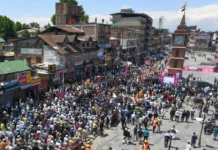
Chenab Valley remained shut on August 27, 2026, in protest against the tragedy. What began as whispers in a village has now grown into a case being compared, in its gravity, to the Kathua rape and murder of a Gujjar girl, also a minor, by none other than a BJP lawmaker. That may explain why almost every political party and civil society group in the region is demanding an investigation on similar lines, one whose scientific rigour and credibility were ultimately acknowledged by the Supreme Court.
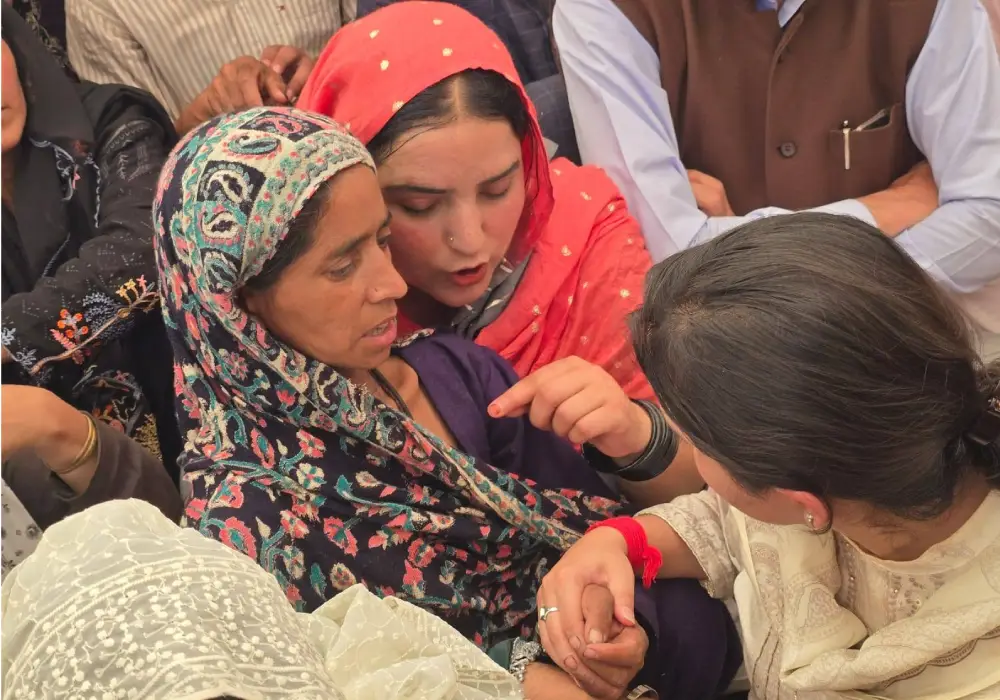
Both cases are similar. At the centre of this is also a minor Gujjar girl, who would have turned 16 this October. Belonging to a poor Gujjar family in Gurinar (Guri Nalla), her mother has been a calm, reticent woman who raised her daughter and son. The son had certain physical limitations and could not accompany his father to the high-altitude meadows to tend the family’s herds. Those who knew the minor remember her as a lovely child. That is perhaps why she became the target.
How It Surfaced
The tragedy was detected almost by chance. A fortnight before her death, the girl complained of stomach pain. Her mother attempted the traditional kada, a concoction of some herbs. She did not report any change, forcing the mother to call her husband and suggest him to take the daughter to the hospital.
It all started on August 10, 2026, when she was taken to the local primary health centre in Chatroo. After examining the girl, the gynaecologist, identified as Dr Rekha, asked the father: “How long is she married?”
Shocked, the man said she is a child, and how can she be married? Some basic tests were carried out, and they tested positive. The doctor sought an ultrasound and a urine test. She also advised the girl’s father to report the matter to the police. Now the protesting community says that under the POCSO standard operating procedure, it was the doctor who was supposed to inform the police.
The police station is said to be at a stone’s throw from the hospital, but they could never cross those few hundred meters to report the case to the police.
The Gang Appears
The people on the street claim that as the father-daughter moved out of the hospital premises, the accused allegedly intercepted them. It is being alleged that a drug store owner operating within the hospital informed the accused, as a result of which a member of the powerful Sheikh family took the girl for further examination to a private facility in Kishtwar, travelling with them in his own vehicle. The ultrasound at this facility reportedly confirmed a pregnancy of around seven months. Many questions are now being asked about the diagnostic centre as well.
Back home, when the family began asking the victim about the people she had been in contact with, she named Khalid Master, the head of the state-run institution where she was enrolled. According to accounts emerging from the region, the abuse had allegedly continued for several months. Police are investigating whether the teacher was the sole abuser or if there were others.
What followed was, by all appearances, an attempt at crisis management. The first intervention reportedly came from elders of the Gujjar community, who approached the family and urged them to bury the matter, warning that disclosure would bring dishonour upon the family and make it difficult for anyone to marry the girl. The victim’s father, enraged, is said to have responded that his family’s honour had already been destroyed; what he wanted now was the alleged rapist, either to kill him or hand his daughter over to him.
Soon afterwards, another meeting was convened, this time attended by elders from the accused’s side as well. What effectively became a panchayat brought the victim’s father before a gathering of Gujjar and non-Gujjar elders. According to accounts of the meeting, the same indecent proposal was put to him, and considerable pressure through emotional blackmail was brought to bear on him to accept it.
More than 25 people were reportedly present who were served sumptuous meals also. This kangaroo court allegedly decided to send a group with the victim and her father to the hospital to terminate the pregnancy. The father was reportedly given some money for the purpose, while accounts also suggest that a document was prepared and that his thumb impressions were obtained. He was assured good compensation. Most disturbingly, he was allegedly made to swear on the Quran that he would abide by the consensus reached at the meeting.
According to information gathered by tribal rights activists, whose petition to the National Commission for Scheduled Tribes on August 23 led to an intervention, a Panchayat took place after the pregnancy had already been disclosed, but before the alleged forcible termination. This sequencing is significant: it places the community meeting inside the chain of events rather than merely as an aftermath.
Afterwards, people from the Sheikh family reportedly drove the victim, her father and a relative to Kishtwar, where they were initially accommodated with a relative on the outskirts of the town. They were later taken to District Hospital Kishtwar. A formal hospital entry was made, but the victim was then reportedly moved to a separate area, where medicines were administered to induce labour. Her father was kept at some distance, allegedly on the assurance that the hospital staff would take care of her.
The victim was subsequently taken to Government Medical College (GMC) Doda. Her father, however, was left behind in Kishtwar and his relative, Nooruddin, was taken in his place. The journey was made in a hospital ambulance.
It remains unclear whether the attempt to terminate the pregnancy at Kishtwar had failed, or whether the procedure had been so crude or traumatic that it caused complications beyond the capacity of the ‘crisis managers’ to manage. No immediate explanation was available. Police, however, have arrested Farooq Ahmad, a sweeper of the hospital who was allegedly the manager of the mess once the victim was brought in. The hospital has terminated his services.
At GMC Doda, however, the situation took an unexpected turn. Accounts suggest that the stillborn child was taken away and that hospital staff began repeatedly calling out the name “Iqbal”, reportedly identifying him as the victim’s husband. Nooruddin, who was being kept aside, responded because his own son is named Iqbal.
When he asked what was happening, he was reportedly told that they were looking for Iqbal, ‘is ka ghar wala’ (her husband). Nooruddin was stunned. His son, he said, was only 13 years old; how could he possibly be the girl’s husband? In fact, the victim was unmarried, he disclosed.
A cop who was watching the drama felt suspicious and sensed that something was seriously wrong. He informed his Station House Officer. It was through that call that, for the first time, the Jammu and Kashmir Police was alerted to the circumstances surrounding the case.
By the time the police began acting on the information, those accompanying the victim had reportedly put her into an ambulance and set off towards Jammu. Police pursued them, but the ambulance had already covered considerable ground. Several cars carrying relatives of Khalid allegedly continued to follow the ambulance throughout.
During the journey, a medical assistant accompanying them reportedly noticed the victim’s pulse weakening and suggested taking her to Batote hospital for care until she stabilised. The group allegedly refused, insisting that they would take her directly to Jammu. Near Udhampur, she reportedly died.
There are accounts that the ambulance was changed again and that her body was then driven towards Kishtwar in a private ambulance. Somewhere along the route, some of those accompanying the ambulance reportedly got out.
Eventually, the police took control of the situation, intercepting the ambulance and taking custody of the body at Shalimar, about six kilometres short of Kishtwar town. Back in Kishtwar, a Sheikh family sympathiser reportedly located the victim’s father and drove him home, without telling him that his daughter was dead.
By then, however, the story had begun to explode. And with it, the carefully constructed effort to contain it began to collapse.
This reporter has seen a “referral slip” apparently issued by Government Medical College and Associated Hospital, Doda. One has MRD No: 111521 showing date of admission and referral as August 20, 2026. The patient is shown as 20 years old and wife of Iqbal of Chatroo. Another slip in circulation carries a name that was also the victim’s name, showing her age as 24, and the daughter of a Padder resident, but its date is August 22. Police are investigating both.
School and Teacher
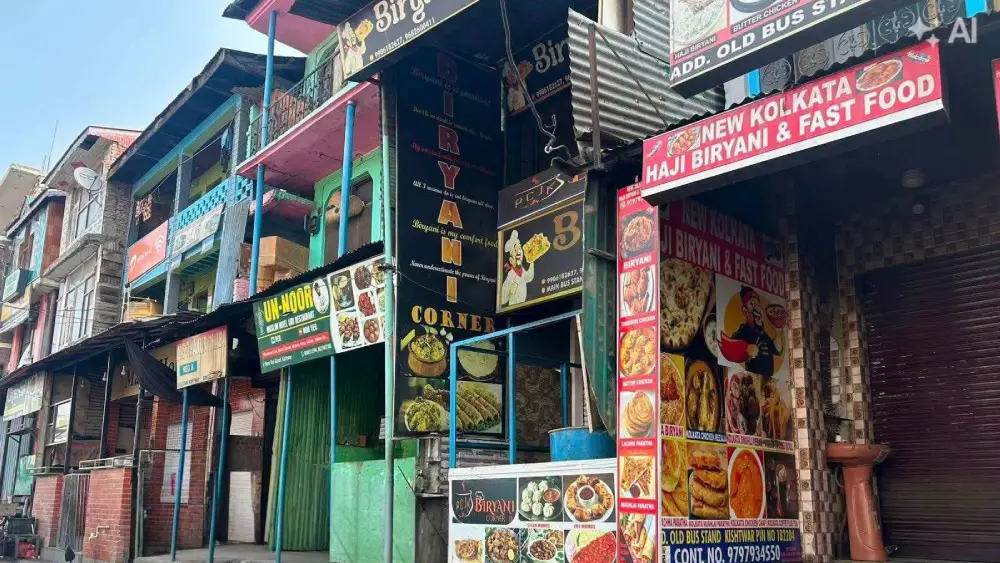
The prime accused is Khalid, a Teacher Grade-II and the in-charge headmaster of Government Middle School Bumalpora in Inderwal. He has been arrested. His brother, Tariq Hussain, has also been arrested and is named as a co-accused.
What is of importance to note is that the victim’s date of birth in official records is October 12, 2010, which means she would be 16 by October 2026. However, she was enrolled in fourth primary. Ideally, she should have been in the tenth standard. A resident said the education per se is not very popular with the Gujjar community. It was not known if she had attended the school earlier in her life and then dropped out. Kishtwar district witnessed a serious campaign to get the Out of School Children (OoSC) back to the classroom under Samagra Shiksha Abhiyan somewhere between 2022 and 2024. Whether she was brought back to school under that campaign is also unknown.
One teacher from the same school has said on record that he saw the victim come to school for a single day, on the day of an examination, which she half wrote and then left. Another teacher told this reporter that she was barely seen in the school. “The entire records are with the headmaster who is with police,” one teacher said. “We have no details, and we cannot explain when she joined the school and why she was in fourth primary at this age.”
The school, having its own building, is less than a kilometre away from the victim’s home. Till the crisis erupted, 100 enrolled students were being taught by five teachers, an Aaya and a cook. “The school was inspected by various officers, and we are operational, but a few students are not coming,” one teacher said.
Another input suggested that Khalid had last reported to the school on August 11 and told his colleagues that he had been accused of raping a girl who is now seven months pregnant. He, however, did not tell his colleagues that the victim belonged to the same school that he headed.
The Political Aspect
Nobody has, so far, openly played politics with the tragedy. But politics has been woven into it from the very beginning.
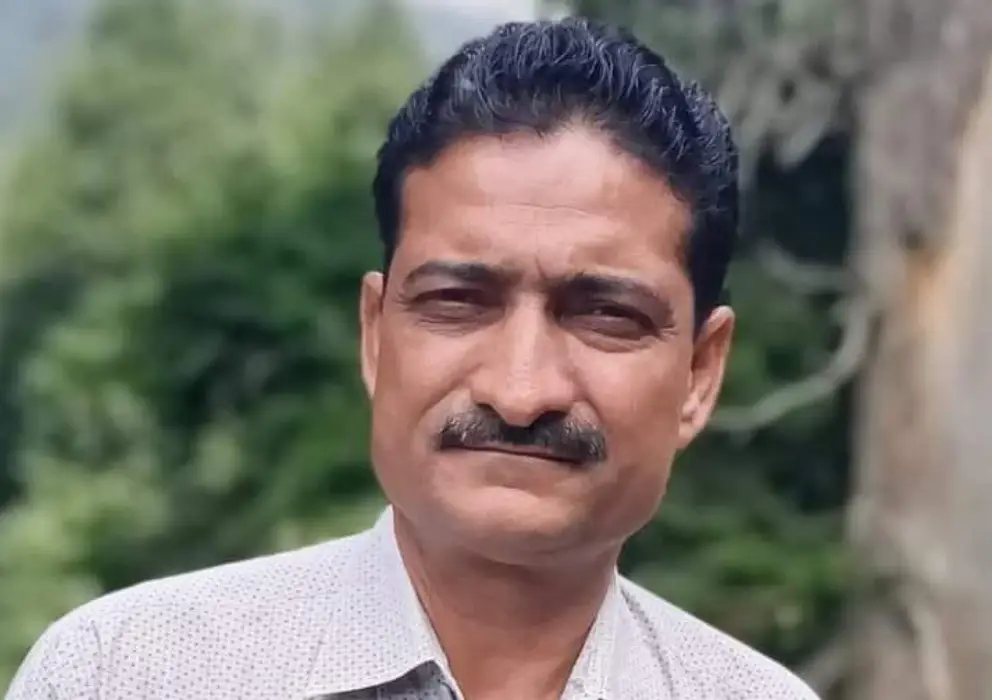
One of the relatives of those accused of the heinous crime is Haji Ghulam Qadir, who had been appointed the Congress’s vice-president in Kishtwar in recent months. He was allegedly among those present at the panchayat where, according to accounts emerging from the area, an extraordinary effort was made to suppress the case. One report said the victim was actually housed in his Kishtwar home after the agreement.
As the allegations began receiving wider attention, the local Congress wrote to the party leadership, following which Qadir’s appointment was put on hold on August 24.
Three days later, on August 27, PCC president Tariq Karra arrived in the district and was heading towards Chatroo when police stopped him. He later addressed a press conference there, insisting that the Congress stood with the victim and her family.
The political temperature had risen even earlier.
On August 26, when ruling-party MLA Payare Lal Sharma reached the village, he was confronted by an angry crowd. By then, however, the ground had already been prepared for confrontation.
A lawyer said to be associated with the PDP had alleged that Inderwal MLA Sharma spoke to the control room at GMC Doda on the morning of August 20 about the case. According to the allegation, he sought an ambulance to facilitate the victim’s transfer but was refused because the case had been deemed suspicious. The claim carried a larger insinuation: that the MLA knew about the circumstances surrounding the tragedy but failed to alert the police, which, if true, would raise serious questions about what he knew and when he knew it.
Videos circulating online show a visibly agitated Sharma trying to persuade the crowd to disperse for two days, until the police could complete its investigation. The crowd refuses.
Sharma tells them that he has already spoken to Chief Minister Omar Abdullah and the education minister and remains in touch with the police. The crowd, however, is demanding answers. Among its questions was why the internet has been shut down, and whether the communication blackout is itself an attempt to silence the community.
The following day, August 27, Ghulam Mohammad Saroori, who represented Inderwal for three consecutive terms before Sharma defeated him, arrived in Chatroo and encountered much the same hostility. He managed it better than his successor.
“I could not come because I was mourning my sister’s death, who is your sister too,” he told the gathering. He invoked his long association with the area, saying he knew even its hens and buffaloes and had been part of its social ecosystem for decades. “I have gone to Hajj, and I take the oath of the Kaaba and the Quran; there is no politics in such an issue.”
But Saroori drew a sharper distinction from his successor. He told the crowd plainly that the Chief Minister does not control the police and that he had therefore sought an appointment with Lieutenant Governor Manoj Sinha. He said they would meet the LG and demand that the investigation be transferred to the Crime Branch.
Then he turned his fire on Sharma.
“The man who came here has not explained his phone call about arranging an ambulance,” he said, referring to the MLA who had defeated him after his three successive terms. Saroori also challenged Sharma’s promise to spend money on the case: “He told you he is going to spend money for the case. Tell me, where is the money required in this case? The victim is represented by the police. It is Sarkar banaam-e-ABC.”
Saroori argued that justice for the victim should be a common cause and that political parties should therefore stand together rather than turn the tragedy into another source of division. Why, he asked, should the people become victims of provocation, a pointed reference to Gujjar leader Talib Hussain, who was among those in the gathering.
Hussain, a PDP loyalist who had earlier been jailed during protests over the Sidhra demolitions, had emerged as one of the most prominent voices at Chatroo. Basically from Kokernag (Kashmir), he was among the first political figures to organise protests and articulate the community’s anger and demands. He has been an ST leader for a long time. At one point, he told a BJP lawmaker that police had cordoned off the village and tried to arrest him but failed.
The last politician who visited the village was BJP’s Kishtwar lawmaker, Shagun Parihar. She was received well. She heard all the people, interacted with the family, heard Talib Hussain’s speech and turned emotional after getting the details. People told her that they know only “your voice matters”. She said the case will be shifted to the specialised branch. “Sarkar aaj bhi soyi hai hamesha ki tarah,” she said, apparently referring to the elected government, which lacks any authority over the police. “This is the third case of its kind; the first was in Delhi, the second was in Jammu, and the third is in Inderwal.”
The tragedy, in other words, had acquired a political life of its own, even as every side insisted that politics had no place in it.

The Investigation
“We have arrested five people so far, including Khalid, the teacher, Tariq, his brother, Ishaq and Riyaz, the teacher’s two brothers-in-law; and sweeper Farooq, who has been involved in many such cases,” SHO Rishi Kumar said. “He said some more arrests are taking place.” Tariq, it may be recalled here, was married and has three daughters and a son, all studying in a private school.
The officer said that the two sides had agreed to manage the matter internally. The accused were supposed to pay money; a young man was being readied to marry the victim, and both sides were supposed to help each other in terminating the pregnancy.
“When I finally intercepted the ambulance and the dead body, they were not even ready to move an application. In this case, there is no complainant. We started inquest proceedings and later converted the FIR,” he said. “At the time of the body seizure, Nooruddin, her uncle, was the only relative accompanying her.” One report said he has also been arrested for accepting the money.
The FIR No 34/2026 at Police Station Chatroo is registered under Sections 61(2), 65(1), 90, 91 and 92 of the Bharatiya Nyaya Sanhita, besides Sections 4, 6, 8, 10 and 17 of the POCSO Act. During the investigation, the Police have also added Sections 3(1)(w)(i), 3(2)(v) and 3(2)(va) of the Scheduled Castes and Scheduled Tribes (Prevention of Atrocities) Act.
According to the police investigation, Khalid, a teacher at the school where the minor studied, repeatedly sexually assaulted her over several months, resulting in her pregnancy. Police allege that he and his brother Tariq subsequently administered medicines intended to terminate the pregnancy.
The minor was initially taken to PHC Chatroo and then shifted to District Hospital Kishtwar by Tariq Hussain and others, allegedly with the assistance of Farooq Ahmed, a daily-wage sweeper at the hospital. She underwent an ultrasound and received medical treatment before being referred to another facility.
Police said an attempt was subsequently made to induce delivery through surgery. The minor delivered a stillborn child during the procedure and later died.
The SIT, headed by Kishtwar Additional SP Pardeep Singh, includes DSP Dachhan Nitish Sharma, Chatroo SHO Inspector Rishi Kumar and other officers. Singh said the team was conducting a “thorough, scientific and time-bound” investigation into all aspects of the case.
The Demand
Nobody from any political party or the community questioned the police investigation. Their only point is that the ecosystem that operates to somehow defend the accused is so diverse, strong, having resources that it would require a specialised investigation to uproot it.
Chief Minister has already directed the school education department to complete its inquiry on an expeditious basis within a month, so that stringent and exemplary action can follow. People know this, but they point out two things. One, the Chief Minister should have visited the family and, second, he should have written a letter to the police for a specialised investigation.
It is now LG Manoj Sinha who will have to finally decide if the investigation continues as it is going on or the case will have to go to a specialised investigation as the people demand.
(Asif Iqbal Naik and Maleeha Sofi contributed to the report)
Post Script
Within days after the BJP MLA (Kishtwar) made a public promise that the case would shifted to the Jammu and Kashmir Police’s Crime Branch as is demanded by the people, the LG Administration transferred the case. By then six people were formally arrested including a nurse.