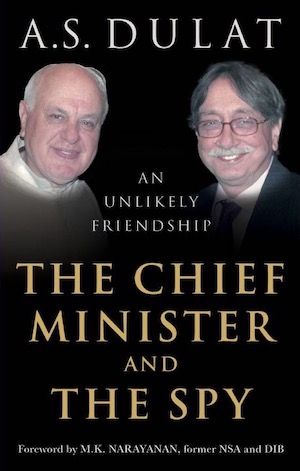
Dr Farooq Abdullah, five-time Chief Minister of Jammu and Kashmir, and former RAW chief AS Dulat have shared a bond spanning nearly four decades. But Dulat’s third book has stirred controversy, with its revelations about the JKNC’s stance towards the BJP after the abrogation of Article 370 and the reorganisation of the state. Yet, the book offers far more than just that, writes Masood Hussain

When news emerged in early 2020 that former RAW chief Amarjeet Singh Dulat had met Dr Farooq Abdullah — Jammu and Kashmir’s oldest living politician and five-time Chief Minister — at his residence at Gupkar, Kashmir’s erstwhile power street, it was widely seen as a signal: Delhi was reaching out again. At the time, Abdullah was under detention, with all access to him tightly restricted.
Dulat and Abdullah share a long and complex history that dates back to the twilight years of the insurgency. What began as a professional association slowly evolved into a personal attachment. Over time, Dulat became not just a confidant but a voice for the Abdullah family in Delhi’s corridors of power. In his earlier books – Vajpayee: Kashmir Years (2015), A Life in the Shadows (2022), and a bit in The Spy Chronicles (2018), Dulat has written extensively about this relationship, full of shared anecdotes, tensions, and political insights. His writing has consistently placed Dr Abdullah and his family at the heart of Kashmir’s political narrative.
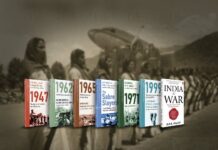
So, when Juggernaut Publishing released early reviews of The Chief Minister and The Spy, it didn’t take long for the books to make headlines. Part memoir, part political chronicle, Dulat’s new work reinforced — once again — the centrality of the Abdullahs in the story of Kashmir.
Dulat has been consistently critical of the events of 2019. “My point was always — why tear away even the fig leaf of dignity that Kashmiris still possessed?” he writes. His criticism extends to the way mainstream political leaders were detained. For him, nothing embodied Delhi’s “grim determination to stamp its authority” more starkly than the act of jailing Farooq Abdullah.
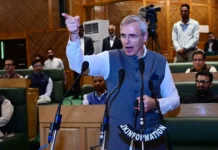
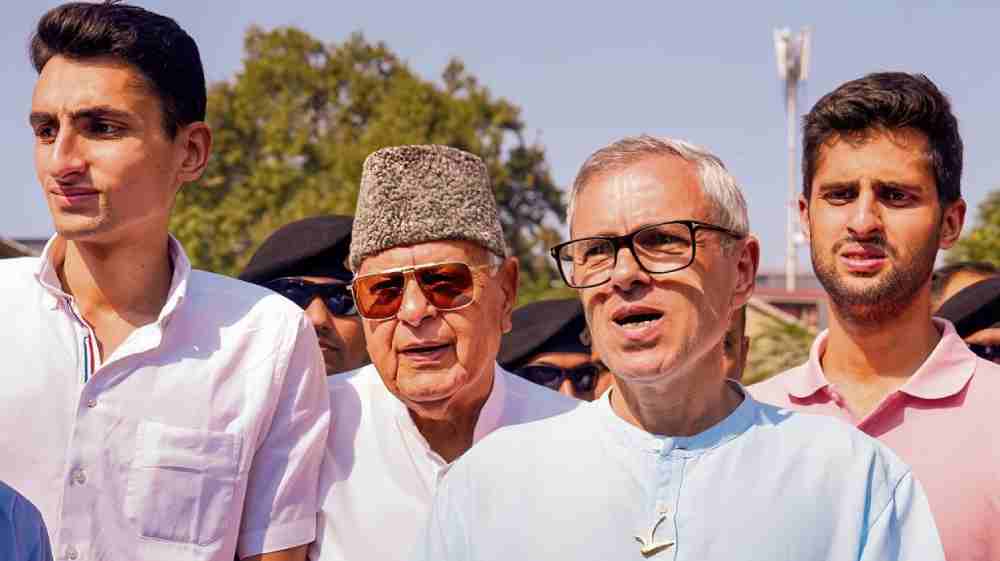
As media outlets began highlighting passages from the book, the response from Dr Farooq was swift and unusually sharp. In a rare public outburst, he accused Dulat of betrayal. Speaking to reporters, he called the book a “cheap stunt” and dismissed it as untrue. “A friend should never write such things about another friend,” he said. “I started reading the book but put it down halfway through.”
Farooq’s arch political rivals, particularly the PDP, quickly seized on the controversy, launching a campaign suggesting that, unlike them, the National Conference had maintained a covert relationship with the BJP. Dr Farooq rejected this outright. “He (Dulat) implies I was acting on his advice — that he told me to keep a small cabinet (in 1996). But I had 25 ministers. Why should I consult him?” The book, he said, has too many mistakes. “He has written that I was going by his advice but the fact is that I was working with the cabinet and not with him.”
Completely dismissing the “revelations” that JKNC was ready to support the abrogation, if taken in confidence, Abdullah asserted that “if that was the case, why should we pass a resolution for autonomy with a two-thirds majority. He said there was a role of US ambassador to India, Frank G Wisner, in getting JKNC to participate in the 1996 elections and not Dulat, as he has claimed in his book. “Either he had to sell the book or he wanted to appease the BJP, with whom he had some issues after they sent him to me in a special aircraft when I was in jail,” Dr Abdullah said. “Throughout the book, he asserts that I consulted him on everything, which is untrue.”
After the Fall
On February 12, 2020, morning, when Amarjeet Singh Dulat landed in Srinagar, the city looked like a faded painting, snow clinging to shaded corners. Dr Abdullah’s Gupkar home appeared desolate, the main gate barred, and two guards huddled silently around a rod heater. Dulat had been escorted by the SP in charge of Dr Abdullah’s security. The family had nothing much to offer other than mushrooms or asparagus. “That’s all we have,” Moolie told the family’s spy friend.
Still, the conversation after Dulat’s first vegetarian lunch at Gupkar turned to politics. “Main aaya hun toh samajh lo ki Dilli baat karna chahti hai,” Dulat said quietly. (Now that I’ve come, you can assume Delhi wants to talk.) Farooq didn’t flinch. “Haan. Main samajh gaya.” (Yes. I understand.)
Farooq narrated his meeting with Prime Minister Modi on August 3. “He was so nice that even sugar could not melt in one’s mouth,” Farooq remarked. But the decision was already made. “He made the Home Minister announce it, so that he is above it”
What hurt Farooq most wasn’t the abrogation itself, which he had long believed was inevitable given the BJP’s manifesto, but the fact that Delhi hadn’t taken him into confidence. “We would have helped,” Dulat has written, quoting Farooq from the same meeting. “Why were we not taken into confidence?”
It was the deepest cut for the man who had spent decades trying to be Delhi’s bridge to Srinagar. He wasn’t just bypassed. He was detained under the Public Safety Act. “Do it if you must,” he told Dulat, “par yeh arrest kyu karna tha?” (But why arrest us?)
Still, Farooq didn’t lash out. He waited. When released, he turned once again to faith. And then — quietly, but firmly — he returned to politics.
The PAGD
Farooq’s masterstroke, as per Dulat, came in 2020 with the formation of the People’s Alliance for Gupkar Declaration (PAGD). It was a coalition of Kashmir’s old political families and rising local leaders, united in their resolve to resist the new political order. At the first PAGD meeting held at Mehbooba Mufti’s home, Farooq quoted his father: “Like him, I will stay in fire and douse the flames”
The goal wasn’t a revolution. It was relevant. Farooq would “fight in Parliament and raise issues.” And yet, ever the pragmatist, he added: “Our doors are never shut. If and when called [by the Centre], we will go.” Dulat’s book suggested that when Delhi had flown him to meet Farooq, he carried with him two subtle but pointed suggestions. The first was that Farooq issue a public appeal for peace, urging calm and discouraging any form of violence. The second suggestion was more political: that he signal his willingness to re-enter the mainstream and resume political activity, even within the new constitutional arrangement post-Article 370.
Farooq rejected both. He told Dulat that trust had been shattered, and that any public gesture made under detention would ring hollow. Beyond these suggestions, there were clear, though unspoken, restrictions — he was not to speak to the media, and certainly not to mention Pakistan. Farooq honoured those red lines during their conversation, but the silence, as Dulat noted in his book, was as political as any speech.
Behind this defiance was realism. Farooq believed Article 370 was already hollowed out since 1975. “It was a fig leaf over Kashmiri dignity,” he said. The real issue was not legal — it was emotional and cultural. And that’s what had been shredded without warning.
No to the BJP
Farooq’s options after 2019 were limited but clear. In public, he refused outright any alliance with the BJP. “We are not going with the BJP,” he declared ahead of the 2024 elections. “We want a strong, inclusive government.”
Yet Dulat, who had known Farooq for decades, saw the layers beneath. “Who would blame him,” he wrote, “even if he joined the BJP, knowing fully well that Kashmir would never forgive him?”
The election boomeranged against the BJP, especially in the non-Hindu belts of Jammu and Kashmir. Even as the BJP tried to court Shia and Gujjar votes in Kashmir, it was the JKNC that won all three seats in the Valley in the 2024 Lok Sabha elections. Farooq had played the long game. He fielded inclusive candidates and reached out to constituencies others ignored — and Jamaat-e-Islami, surprisingly, seemed to support him quietly, Dulat makes his readers believe. He had no illusions, though. “There is hatred for Delhi and the BJP in Kashmir,” he told Dulat in 2024.
Dulat, however, believes that Dr Farooq Abdullah’s aim was not revenge but the restoration of statehood.
The First Glance
Barring a chapter and a few crucial passages that pertain to the post-2019 Jammu and Kashmir, Dulat’s book is a monologue of the relations the two men had. It was a relationship of decades.
It began not with fanfare, but with pink gin.
It began in October 1987 in the lawns of Gupkar Road at the farewell tea party hosted by Chief Minister for KP Singh, Dulat’s predecessor, which was attended by the who’s who of Srinagar’s power corridors. Newly posted to Kashmir as IB station chief from Bhopal, Dulat stood quietly in a corner, watching the man he had been instructed to “keep in good humour” — Farooq Abdullah, the Chief Minister of Jammu and Kashmir, who had won a hugely controversial and rigged election in March.
Tall, commanding, dressed in a traditional achkan and Kashmiri cap, Farooq radiated the trademark charisma of the Abdullah clan. Yet, as Dulat would soon discover, behind the warmth and charm lay a complex, unknowable man — “reticent and forthcoming, depending on the time, place and mood”. Their first handshake meant little. But the real encounter came later, unexpectedly, when Dulat was bundled into Farooq’s car as he was headed to the airport. “Come on,” he had said. “Hop in the car with me. We’ll talk on the way”.
That was Dulat’s Farooq — unpredictable, theatrical, and entirely on his own terms.
In Delhi, Dulat’s instructions were clear: Rajiv Gandhi wanted a working relationship with Farooq, after reinstating him as the Chief Minister and sacking his brother-in-law Ghulam Muhammad Shah. “He is our best bet,” Arjun Singh had told him in Bhopal, echoing Narayanan’s brief in Delhi: keep Farooq “on our side”. The accords had just been signed, a storm was brewing in Kashmir, and Dulat — no Kashmiri expert, just a perceptive spook with a conversational gift — was suddenly in the middle of it all.
Farooq, however, wasn’t about to make it easy
A Rigged Election
Just months before, in March, the assembly elections had transformed Kashmir’s political landscape. A watershed moment, the JKNC–Congress alliance had swept the polls, but it was an open secret that the elections were rigged. The Muslim United Front (MUF), especially in key constituencies like Amira Kadal, had been gaining ground. By all accounts, Muhammad Yusuf Shah had defeated the NC’s Ghulam Mohiuddin Shah — but the tables had been turned mysteriously overnight. Mohiuddin Shah won by 4289 votes, and Yusuf Shah became Sayeed Salahuddin of Hizbul Mujahideen, now a banned militant outfit. His election manager, Yasin Malik, turned to militancy and would later lead the Jammu and Kashmir Liberation Front (JKLF), now proscribed post 2019.
Farooq was furious at being blamed. “Rigged election, my foot,” he snapped at journalist Harinder Baweja. “It is India that is responsible for what has happened in Kashmir. They betrayed my father in 1953. They betrayed him in 1975. They betrayed me in 1984. They are responsible, not Farooq Abdullah”.
However, he always believed that “in a state like Kashmir, I have to stay on the right side of the centre.”
For Dulat, this bitterness became the undertone of everything. On the surface, Farooq was gregarious — offering drinks, hosting dinners, charming his way through state dinners — but scratch that surface and a deep distrust of Delhi simmered. He knew when to be kind, and when to slam the door. “Who the hell is Buta Singh?” he snapped once when reminded of Delhi’s curiosity about his whereabouts. “Why should I have time for your Home Minister?”
Not adhering to the script, he at times created a crisis. As Dulat remembers Abdullah’s Anantnag speech wherein he had said that “there were a hundred militants in Kashmir,” leaving the security and intelligence grid from Delhi to Kashmir baffled. Dulat says the statement agitated Delhi as this was the time when “we were still looking for the first one.”
It wasn’t that Farooq didn’t care. He cared too much. He cared for perception, for legacy, for Kashmir. Even today, he is the man best informed about Kashmir. And for Dulat, who found himself unusually close to the man he was meant to observe, it was hard not to care back.
They played golf together. Drank together. Took impromptu helicopter rides. And talked. Not as a politician and handler, but as men navigating a crumbling political frontier. “Always tell the truth [to Delhi],” Farooq had told him early on. “Never lie”.
Winter of Rubaiya
By December 1989, Kashmir had turned from a powder keg into an open fire.
It was the month everything changed — not just for Kashmir, but for Farooq, for the state of India, and for the man who watched it all unfold from the smoky windows of the IB’s station house in Srinagar. On December 8, Rubaiya, daughter of India’s newly appointed first Muslim Home Minister Mufti Mohammad Sayeed, was kidnapped by the JKLF. She had been pulled out of a matador van on her way home from Lal Ded Hospital and forced into a Maruti car. The message to Delhi was brutal and clear: release five jailed militants or the girl dies.
Dulat, as the book reveals, still remembers the grey haze of that winter — the fear, the silence, the smell of smoke in the air. The JKLF’s rise had caught everyone off guard. Just weeks before, whispers had filtered in about “boys crossing over” to Pakistan, but no one believed it would come to this. Even local officers, when asked about the increasing movement, had shrugged it off — “Aap mat ghabraiye” (Don’t worry), one had said.
But the Rubaiya case was no longer a whisper. It was a war.
And where was Farooq?
In London.
Struck by one of his occasional spells of despondency and hypertension, Farooq had flown to England just before the kidnapping. He had sensed Delhi turning against him and was worried about the Congress losing in the upcoming elections. “Woh doobengey aur humein bhi le doobengey (They will sink, and they’ll take us down with them),” Dulat remembers telling him. With elections looming and militancy on the rise, he had gone quiet — not out of indifference, but heartbreak.
Delhi, naturally, didn’t see it that way.
A Stooge in Crisis
The backlash was swift. Farooq was angry at the circumstances that he felt had let him down. Accusations flew that Farooq was absconding in a crisis. That he had never taken Kashmir seriously. That he was forever missing in action — either golfing, drinking, or holidaying. None of that was true, of course, but as Dulat puts it, “Perception is everything in Kashmir.” Even the Valley, which had once adored Farooq’s firebrand speeches, had begun to mutter. He was being called a stooge of Delhi once more, a label he had never been able to shake.
Dulat, stuck between Delhi’s irritation and the state’s implosion, found himself playing therapist to both sides. He fielded calls from a deeply agitated Mufti, who veered between helplessness and suggestion. One day, during a long call, Mufti implied that Dulat should agree that Farooq was no longer fit to govern. “Farooq is essentially useless”, Mufti told Dulat. “There’s nobody better to handle Kashmir,” Dulat remembers replying curtly, “and you know it”.
It was a lonely defence. But one that would matter.
Farooq cut short his visit to London and returned on December 11, because on December 12, as pressure peaked and Delhi’s emissaries landed in Srinagar, it was Farooq who surprised everyone. Dulat dropped by to see him and suggested gently that he call Mufti. “Why?” Farooq snapped. “Kaun hai woh? (Who is he?)”. But within moments, his instinct took over after I gently said, “ Sir, he’s the home minister and you’re the chief minister. You should talk to him.”. He rang Mufti and said, “We will do everything to get your daughter. I will do more than I would have done for my own daughter”.
That was Farooq at his finest — volatile, theatrical, but ultimately generous.
The next day, the Centre gave in. The five militants were released. Rubaiya returned home. And Delhi — bruised and embarrassed — turned its gaze once more to the easiest scapegoat: Farooq.
The Fall
As the winter of 1989 froze Kashmir into silence, the flames of rebellion only grew louder.
On the streets of Srinagar, bomb blasts rang out like punctuation marks on Farooq Abdullah’s political obituary. His critics — in Delhi and within the Valley — were sharpening their knives. The Centre said he had lost control. The militants said he had lost legitimacy. Even the people who once thronged his rallies now jeered.
Farooq himself knew it. “They see me as a stooge of Delhi,” he told his friend Ashok Jaitly after an Eid gathering at Hazratbal in May 1989, where he had tried to appeal for peace. The crowd had shouted at him down. “I could see the anger in their eyes, especially the youngsters’”.
Dulat could see the pressure mounting, day by day. The chief minister was growing more isolated. And then came the final blow.
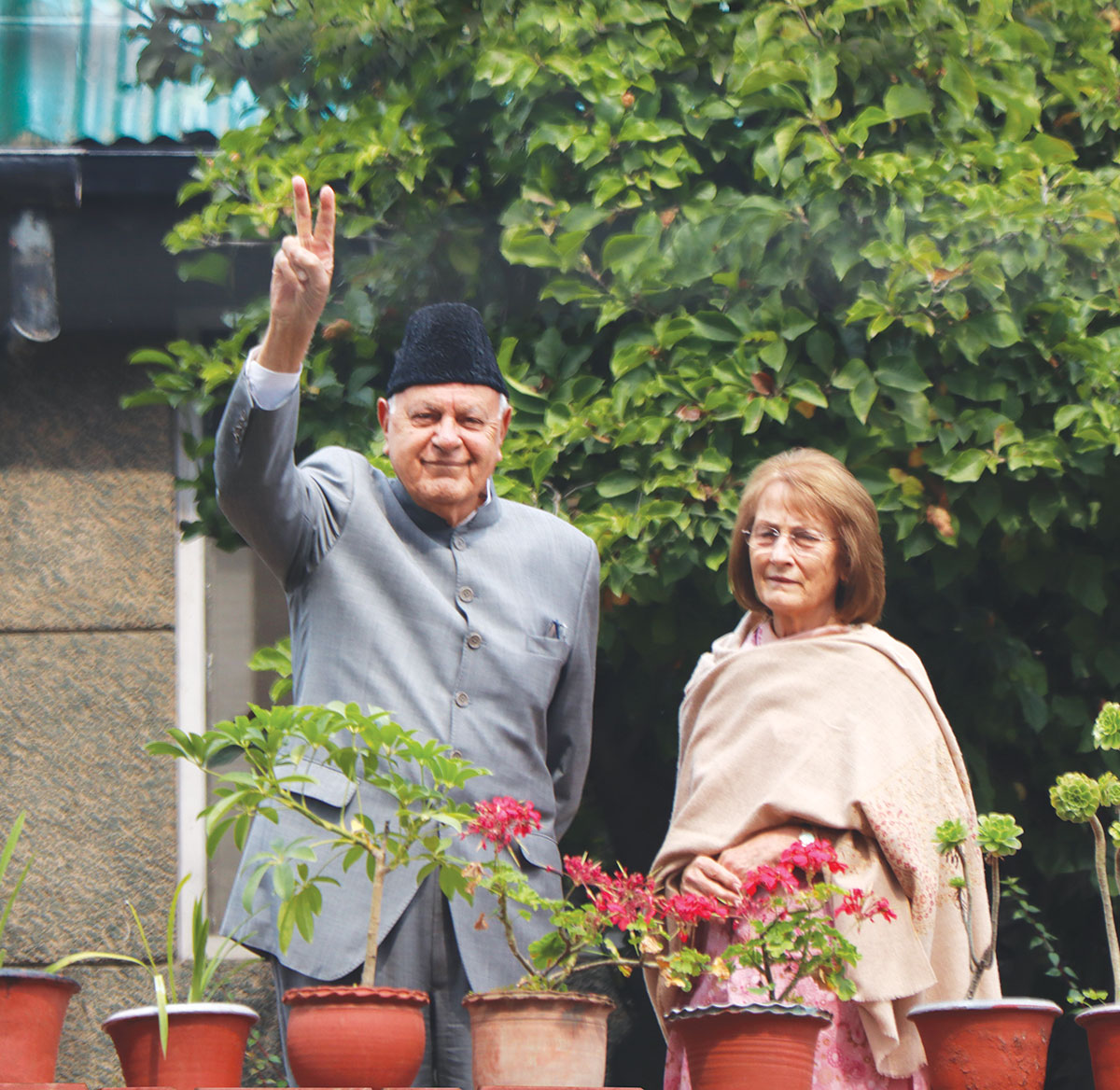
On January 19, 1990, Farooq Abdullah resigned.
It was a dramatic, emotional exit. Delhi had already made up its mind to send Governor Jagmohan back to Kashmir, a move Farooq opposed bitterly. “If you send Jagmohan, I will resign,” he had warned Rajiv Gandhi earlier. And this time, he meant it. When he resigned, he did so with a statement that echoed in the icy corridors of Gupkar Road: “I cannot preside over the destruction of my own people.”
Governor’s Rule followed. Jagmohan arrived. The army rolled in. And within days, the exodus of Kashmiri Pandits began.
It was the darkest period in Kashmir’s post-Partition history. And it changed Farooq Abdullah — and Kashmir — forever.
The Shadow Years
Farooq, now in political wilderness, retreated again — but this time not to London. Instead, he watched from the sidelines as Kashmir sank deeper into militancy and Delhi relied on muscle, not dialogue.
Dulat, meanwhile, remained in Kashmir. He kept the IB desk running — even as his own officers were fleeing the state. “Nobody wanted to be in Srinagar that winter,” he wrote. “A lot of questions were being asked. People were being killed everywhere”.
Farooq didn’t re-emerge into public life with any grand drama. But he was never fully gone. He stayed in touch. He observed. And he waited.
By 1996, India was finally ready to talk again. Militancy had bled Kashmir. The Centre had tried everything. And someone in Delhi — probably Prime Minister Narasimha Rao — remembered that strange, difficult, brilliant man who had once ruled Kashmir with flair.
A quiet message was sent: Would Farooq contest again?
Farooq Returns
The year was 1996. After six years of blood and betrayal, Delhi was ready to return to democracy in Kashmir. Militancy was still active, and fear ran deep. But Rao had understood one thing — Kashmir would never accept Delhi’s writ without a credible Kashmiri face.
That face could only be Dr Farooq Abdullah and his family, who have been synonymous with Indian politics in Jammu and Kashmir.
He had been watching from the sidelines all these years. “For a long time,” Dulat recalled, “Farooq was deeply disillusioned. Not because he didn’t love Kashmir, but because Kashmir didn’t know whether to love him back”.
Rao played it carefully. First, he sent out feelers. Then, he agreed to Farooq’s one condition: the elections had to be clean. No interference. No rigging. Farooq knew too well what 1987 had cost Kashmir. He would not go down that road again.
And so, it began. The National Conference reassembled, campaign caravans rolled out, and for the first time in years, Gupkar Road came alive with crowds again. There was fear, yes. And cynicism. But also, a faint pulse of hope.
Dulat was still in Delhi, but kept close tabs. He knew what this meant to Farooq. The man had been vilified, blamed, insulted, and even abandoned. But now, he was being asked to rescue the same system that had betrayed him.
He did it anyway.
When the results were announced, the JKNC won a landslide. Kashmir had spoken — not with thunder, but with tired relief.
Farooq returned to the Chief Minister’s chair. But this time, he was different: Older. Harder. And lonelier.
The Spy and the Statesman
Over the next two decades, Farooq and Dulat remained in quiet contact. Their roles changed, their positions evolved, but the bond endured.
There were moments of warmth, like when Dulat, now retired, visited Farooq in Srinagar and was pulled into an impromptu meal at home. “Would you like a drink?” Farooq had asked, same as he had in 1988.
But there were also moments of rage.
When the BJP government revoked Article 370 in 2019, Farooq was detained at home under the Public Safety Act. The man who had always tried to keep Kashmir “on the right side of Delhi” was now cast as a threat to the nation.
Dulat, though long retired from the IB, was shaken. It felt personal. He had seen this man navigate impossible odds, balance between betrayal and loyalty, between India and Kashmir — and now he was being punished for it.
When Farooq was released, his voice was quieter. He still smiled for the cameras. But the toll was there — in the eyes, in the pauses, in the silences.
Sage to his son
Different in temperaments, Dr Abdullah has never been critical of his only son, Omar Abdullah, the third chief minister from the Abdullah family. From giving in to his desire to marry in a non-Kashmiri Hindu family to paving the way for him to become the youngest chief minister of Jammu and Kashmir, Farooq has been accommodating.
As Dulat recollects the father-son relationship, he is keen that both were mutually good to each other. Though it is believed that marrying Payal had soured the relationship to some extent, because she “wanted to become the chief minister’s wife- the earlier, the better.” However, that too has been left behind, and the duo has overcome the differences.
Meanwhile, Omar, being away from home for studies and a corporate job, it was Farooq’s nephew Muzy (Muzaffar Shah) who had drawn close to him, leaving behind the family feud of the 1980s. The relationship grew stronger, and Muzaffar expected a reward for his intimacy. The personal dynamics and political preferences came into play again in 1998. Omar was chosen to contest a parliamentary election, and Muzaffar was ignored. It was the 1980s again, and Farooq was given priority over Ghulam Muhammad Shah. The families again had a strain, the latest being post-PAGD formation.
The father and son may share the ideology, but their approach is different. Farooq, being flamboyant and flexible, could sit at any place and talk about anything which suited his mood. Omar presents a picture of contrasts.
Dulat believes that Omar preferred Sheikh Abdullah and bypassed his father altogether in speeches of the 2002 elections, and Dulat believes that “rubbishing Farooq was counterproductive.”
Believed to be too much Englishman, Dulat feels Omar is “correct and honest, a trait that has not always gone down well in his state.”
A perennial feature in Kashmir politics, Dr Abdullah’s charm lies in his personal touch, while his son Omar relies on security and social media.
Omar, being his pride, Farooq has never been the one to interfere with his ways. Though he is clear-eyed about his son and believes, unlike his wife Mollie, he has been too soft on Omar all the while. On the contrary, Omar insists that he was not his father: “I cannot mould myself on what he is.”
At times, there are differences in the statements and sentiments, which speak about the contradictions.
The Last Conversation
In the end, it was not about power. Not for Farooq. And not for Dulat. It was about legacy. About Kashmir.
When Dulat visited Farooq after Article 370 was scrapped, he found him in the same familiar drawing room on Gupkar Road. The garden outside was overgrown. The windows fogged. But the smile: it was still there. Worn, yes, but intact.
“You think it’s all over?” Farooq asked softly, more to himself than to his old friend.
Dulat didn’t answer immediately. He looked at the man who had once driven him to the airport with the breeziness of a college student, who had jumped out of a jeep to march across Bakhshi Stadium as bombs echoed outside, who had dared to tell Delhi to get lost even when Delhi held every card (p. 20, p. 35).
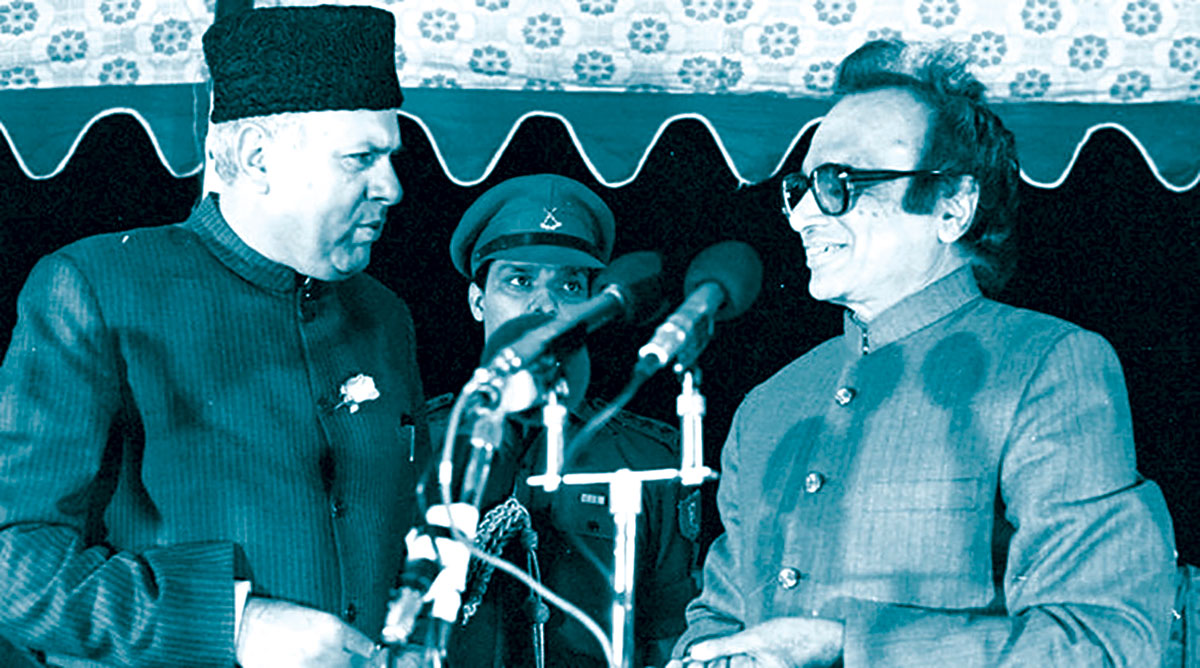
Farooq had never been perfect. He was moody. Mercurial. Prone to grand statements and sudden silences. He drank. He joked. He wept.
But through it all, he remained Farooq — a man of Kashmir, of contradictions, of impossible loyalty.
And perhaps that was what had drawn Dulat to him. “I never truly knew how much he trusted me,” Dulat admitted, “and he never truly understood how much I knew of him”. Their friendship was built on half-spoken truths and unspoken trust. It was a relationship that defied the official manuals of the Intelligence Bureau.
It was, in every sense, an unlikely friendship.
Dulat wrote that Farooq was “two steps ahead of Delhi’s best games”, and that might be true. But he also knew when to retreat. When to absorb a wound in silence. When to crack a joke to break the room. And when to stand, alone, if he must, for Kashmir, the book asserts.
At a time when Delhi only saw Kashmir in black and white, Farooq was the blur of grey they could never quite understand. Too Kashmiri to be trusted. Too Indian to be cast away. Too big to be ignored.
As the light dimmed outside and the two men sat sipping their drinks, the conversation drifted — as it always did — from politics to poetry, from betrayal to golf.
“You know,” Farooq said at one point, “people think I’m not serious. That I don’t care.”
Dulat wrote that he said nothing.
Farooq looked at him. “But you know, don’t you?”
And Dulat, the spy who had watched him from the shadows, nodded.